Key
Status
Planned

A place designed to stay vibrant throughout the day
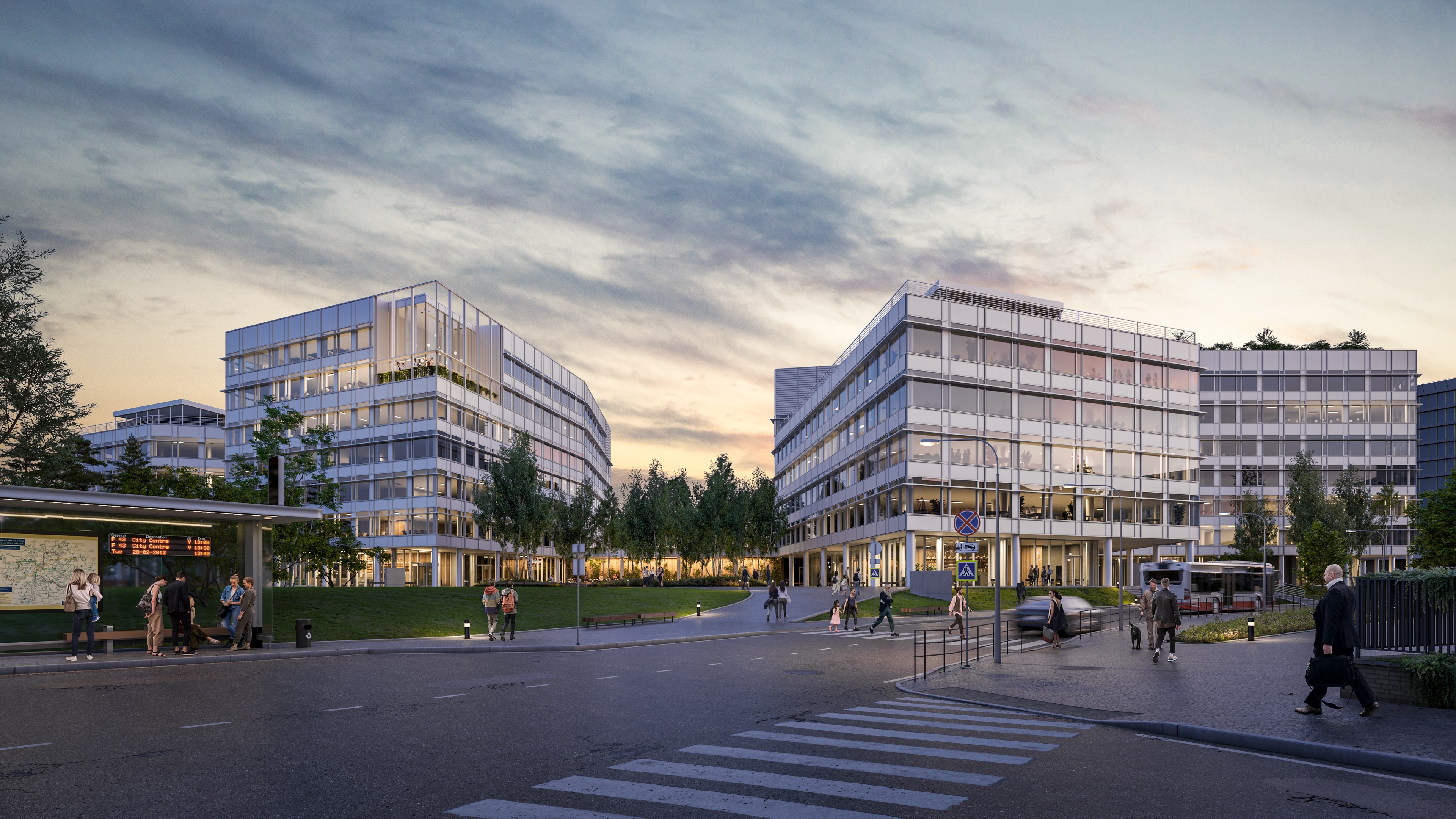
Key is a modern mixed-use project in Prague’s Pankrác district that will connect the business and residential parts of the neighborhood while bringing together workplaces, public space, greenery and everyday urban life.
The project is designed to become a natural part of the area and its daily rhythm.
Service:
Commercial Development
Property type:
Commercial Offices
Size:
Address:
Association, Prague, Czech Republic
Number of buildings:
2
Number of parking spaces:
493
Targeted certifications:
LEED Platinum v4, WELL Platinum v2, Access4You
What makes Key unique?
A strategic hub in the heart of Pankrác
The project is emerging at the intersection of Prague’s dynamic business center and the residential part of Pankrác. Key will naturally connect the surrounding neighborhood through Sdružení and Sutnarova streets, the underpass, Metro Line C and, in the future, the new Metro Line D. More than just an office building, Key is designed to become a natural part of everyday life in the local community.
Open to the community
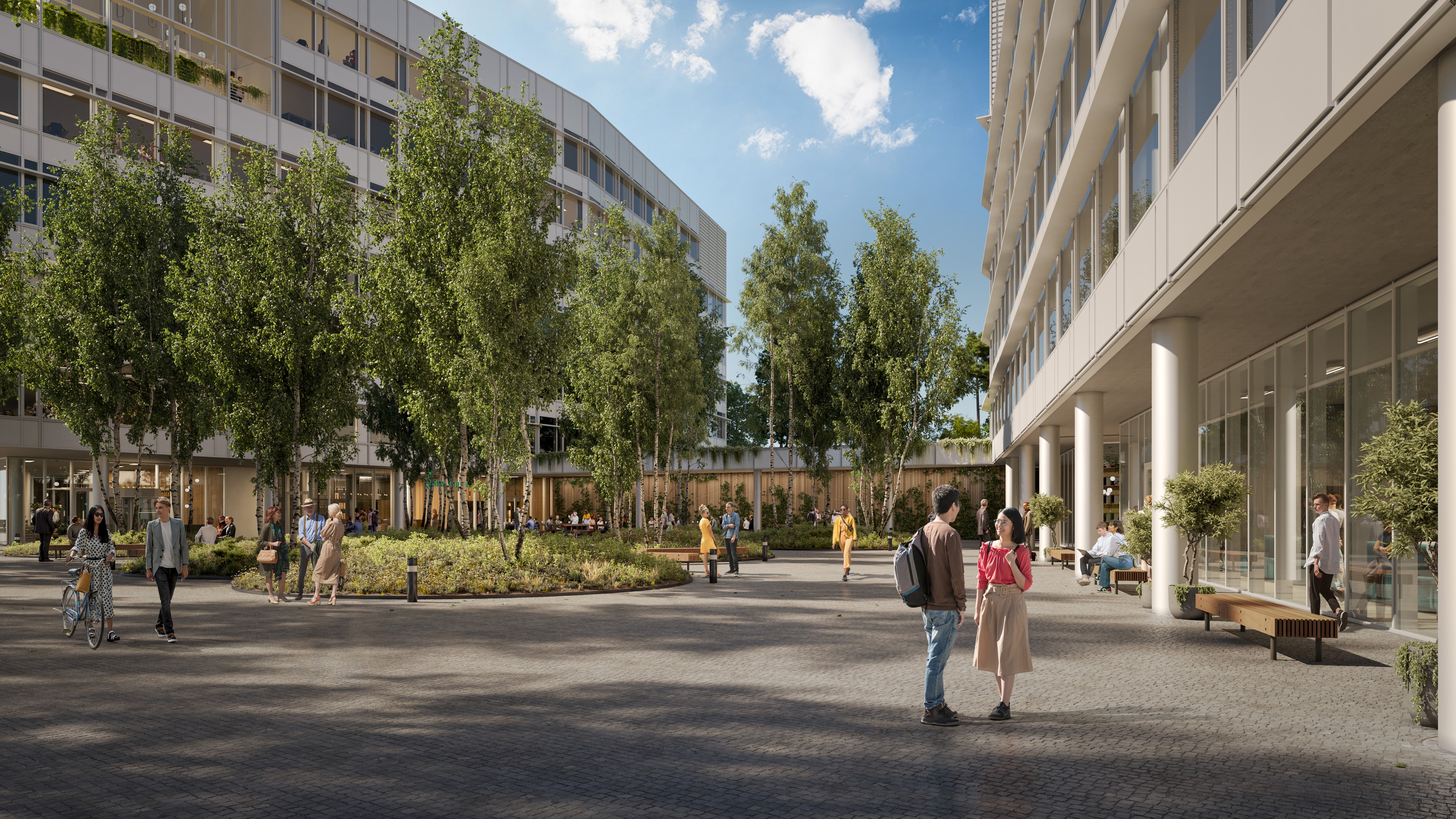
From restaurants and services to public spaces, relaxation areas and an outdoor amphitheater, the project is designed to support everyday life beyond office hours. Our vision also includes the wider revitalization of the area, including a new sports facility for the neighboring school and future tenants. We are transforming an underused site into a vibrant mixed-use destination designed for people throughout the day.
A space with a clear architectural identity
The building is designed to naturally integrate into its surroundings. The concept also references Ladislav Sutnar, after whom the newly created street will be named. His legacy is reflected in the project’s visual identity, interiors and public spaces surrounding the complex.
Designed around your day
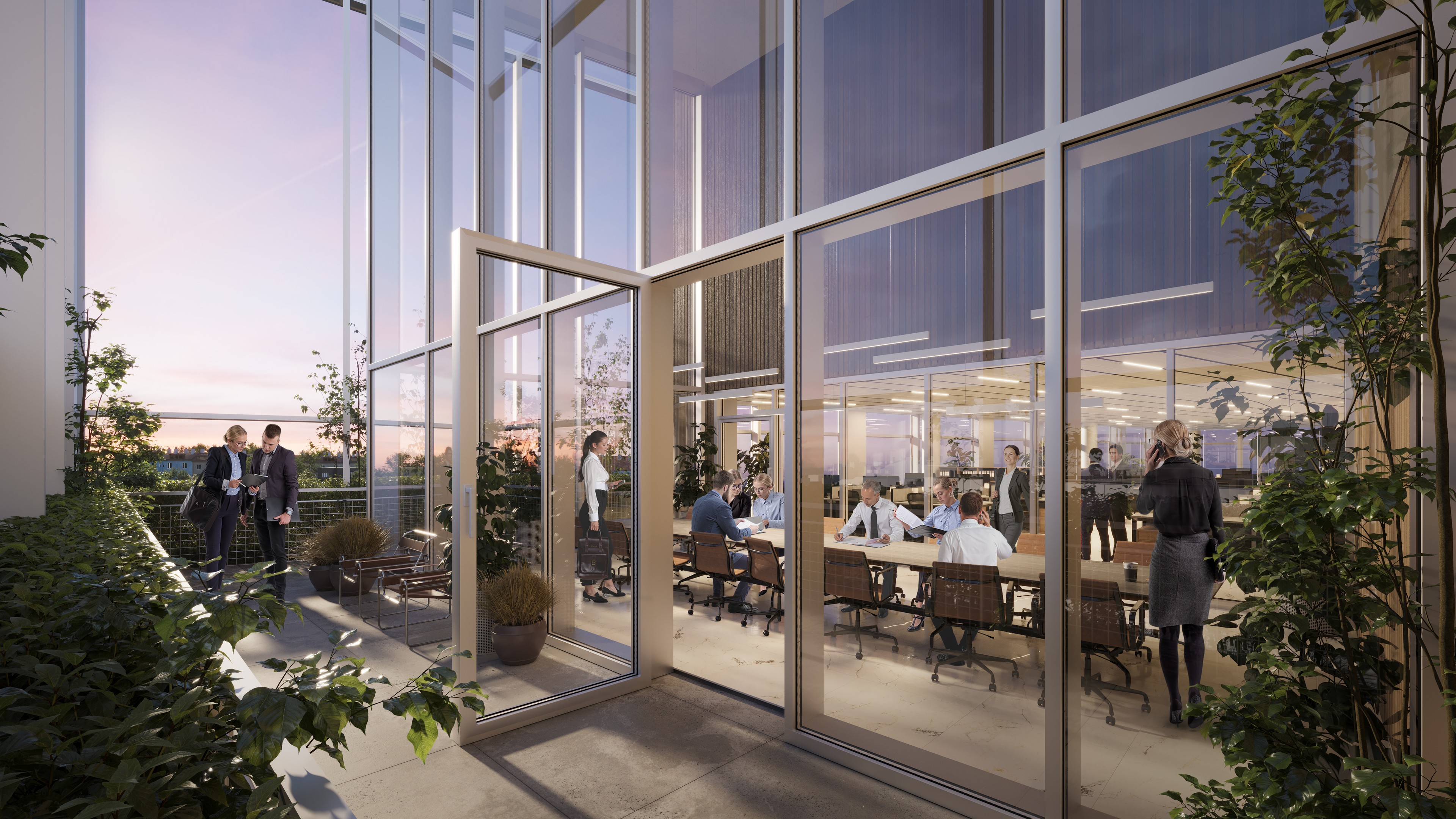
We designed a work environment that reflects the realities of today’s workplace. From flexible layouts and generous natural light to a seamless connection between indoor spaces and outdoor terraces, Key is designed to support comfort, collaboration and everyday well-being.
Future-focused by design
The project is designed to meet the Zero Emission Building criteria under the EPBD IV directive. In practice, this means very low energy demand, zero operational carbon emissions from fossil fuels, the use of photovoltaics and the supply of remaining energy demand from renewable sources backed by guarantees of origin. The building’s energy performance certificate (PENB) is calculated to reflect the actual conditions at the time of project completion, not only the early design phase. Every technological solution – from heat pumps to photovoltaics – undergoes detailed feasibility studies carried out by independent external experts.
Data-driven sustainability
We work to reduce the building’s carbon footprint throughout its entire life cycle – from early design and construction to long-term operation. The project incorporates low-emission concrete and recycled materials and was designed in line with the principles of the EU Taxonomy and the Level(s) methodology. It also targets high standards under LEED and WELL certifications. By preparing the building for future climate conditions and long-term adaptability, we aim to ensure lasting value and functionality for future generations.
Built for future adaptability
The project preparation also includes detailed adaptability studies designed to allow future conversion of the spaces for different types of use, from healthcare facilities to residential purposes. This approach helps ensure the building is prepared not only for the energy standards of 2030, but also for future market needs that cannot yet be fully predicted. At the same time, it supports long-term value for both tenants and investors.
A place for the future
The combination of high-quality architecture and a responsible approach to the future defines our upcoming project in Pankrác. The result is a space designed to respond to the needs of modern working life while meeting ambitious sustainability goals. The project will create a building with a distinct identity, open to the surrounding neighborhood and designed to adapt to future needs.
Gallery of visualizations