Innovation
Building smarter on our Alligator River Bridge project
Construction is more than halfway complete on the new Alligator River Bridge, which serves as a key gateway connecting the North Carolina mainland to the Outer Banks. As part of NCDOT’s $450 million effort to replace the existing bridge on US 64 with a modern two-lane, high-rise bridge, our team is utilizing innovative materials and technologies to prioritize safety and efficiency.
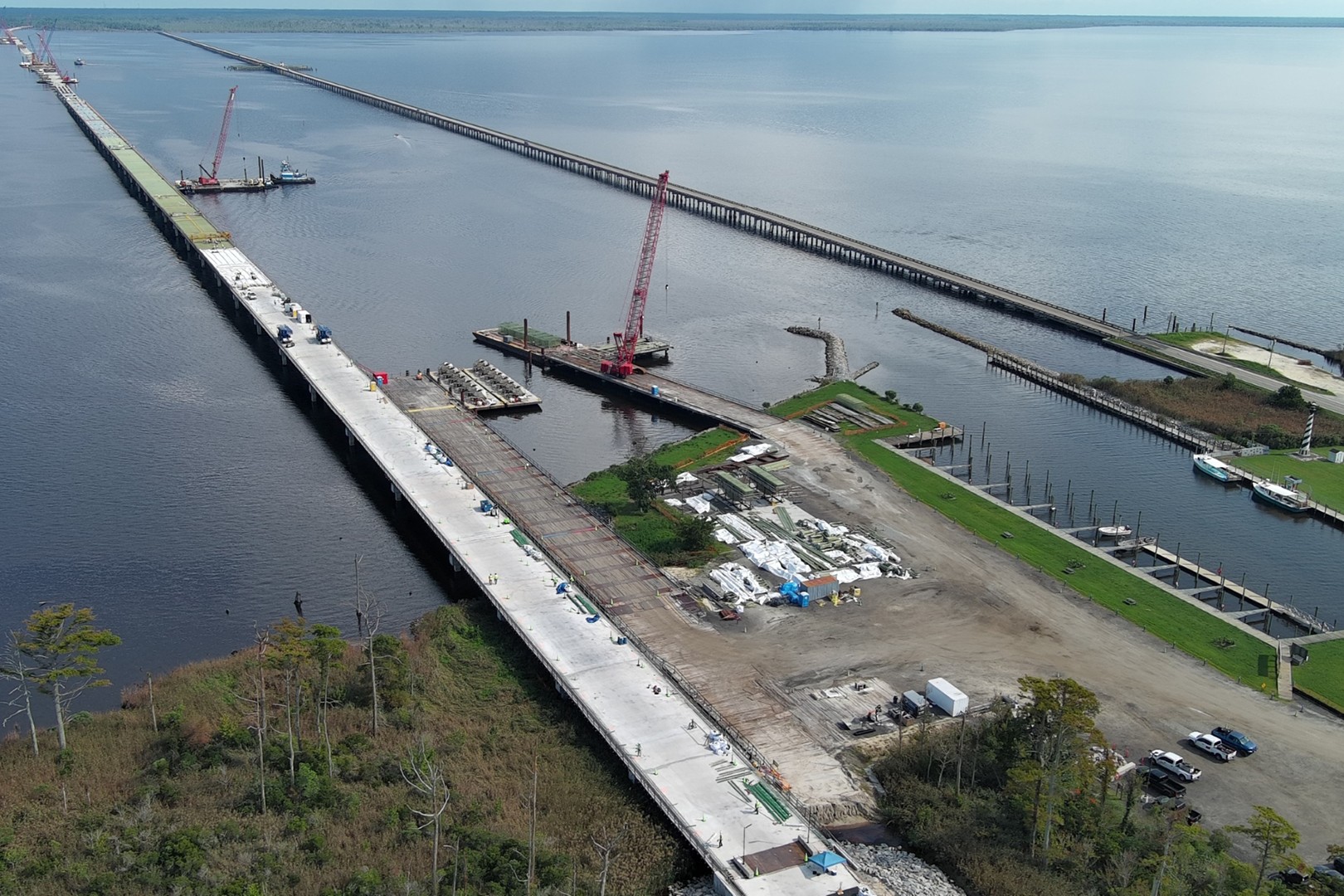
“The Alligator River Bridge is not defined by one innovation. It is a large-scale demonstration of how advanced materials, automation, prefabrication, and innovative marine construction methods can work together to improve safety, schedule, durability, constructability and sustainability,” says Eddie Restrepo, project manager.
Bringing precision to marine construction
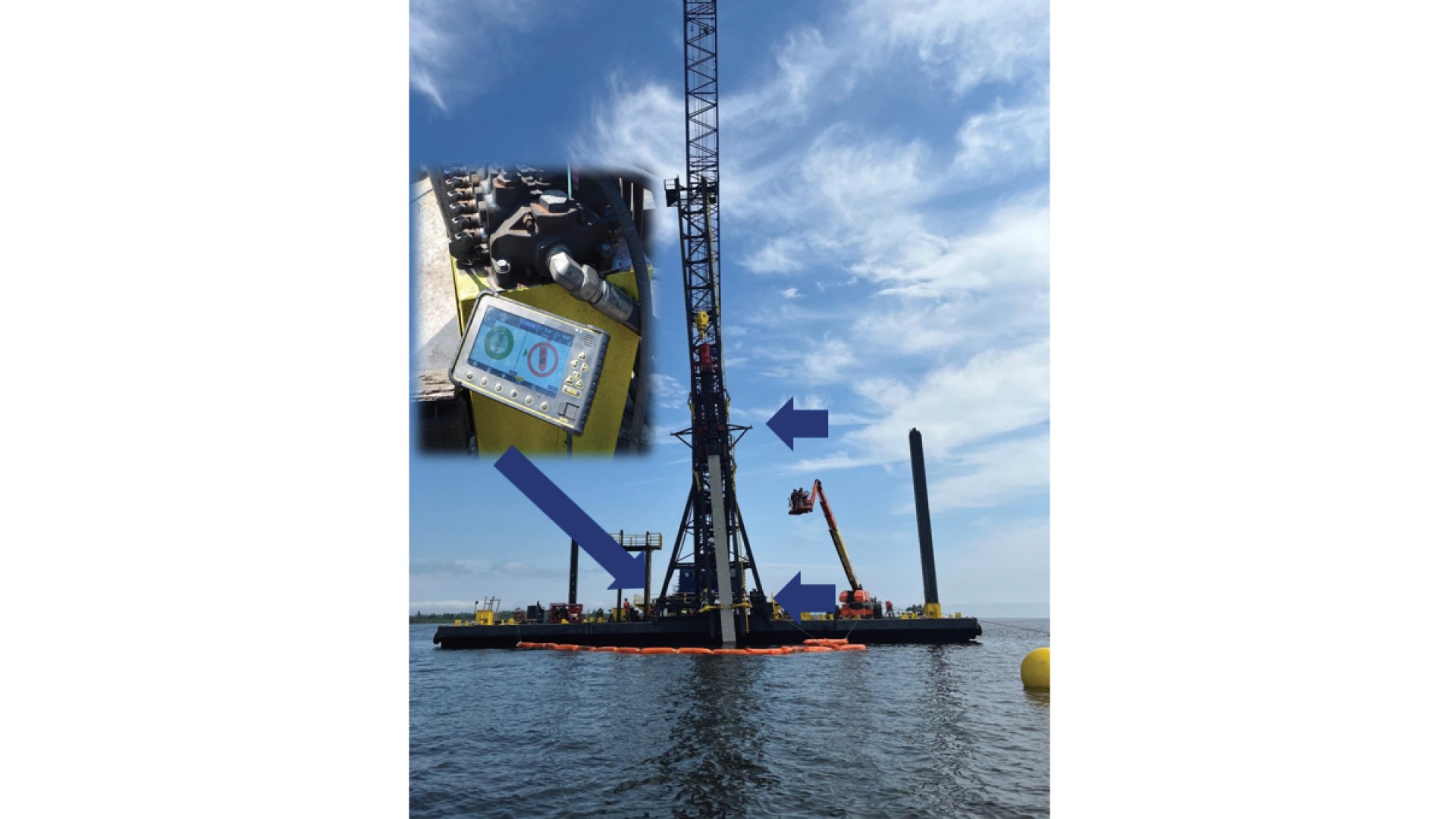
Building a bridge more than three miles long across open water requires precision, especially when placing piles from barges. To help crews work more accurately and efficiently, our team is using GPS machine-control positioning from Leica Geosystems to guide pile placement.
This technology provides crews with real-time information on tablets mounted to the rigs, helping them align barges and guide piles at the correct location and angle. The Leica technology also enables the project’s team to monitor each pile’s location in real-time, reducing the need for surveyors to travel back and forth between the barges. Originally planned as a 21-month operation, pile driving was successfully completed in just 12 months.
Taking the strain out of rebar tying
Innovation is also happening right on the bridge deck. Our team is using lightweight, corrosion-resistant Glass Fiber Reinforced Polymer (GFRP) rebar, in tandem with TyBOT, an autonomous robot that handles the repetitive work of tying rebar.
For our craft professionals, this means less time spent bending, kneeling and repeatedly tying intersections by hand.
“With TyBOT, we’re not just building faster, we’re building safer. Automation takes on the repetitive tying while our craft professionals focus their skills on higher-value work,” explains Eddie.
TyBOT can complete up to 1,100 ties per hour and maintain that pace without fatigue. This technology handles high-volume repetitive tying while ironworkers focus on more complex work that requires their experience and expertise.
Turning innovation into everyday practice
Innovation on our Alligator River Bridge project goes beyond introducing new technology—our team is learning where automation and advanced materials can have the greatest impact and how those lessons can be applied to future projects.
“It’s exciting to be part of a project where we’re not just building a bridge, we’re showing what construction can look like, with safety and innovation at the forefront. There’s a lot of pride in knowing that what we learn here can help shape how projects are built in the future,” says Eddie.
Categories