Project case study
ASHRAE Headquarters Renovation: Improving operational efficiency
Our ASHRAE Headquarters Renovation project demonstrates how thoughtful design and collaboration can significantly improve operational efficiency for all projects and even achieve net zero energy in an adaptive reuse project. With the goal of achieving net zero energy performance using donated equipment, the project shows how efficient systems, a high-performance envelope and passive design strategies can work together to reduce energy demand while enhancing occupant comfort.
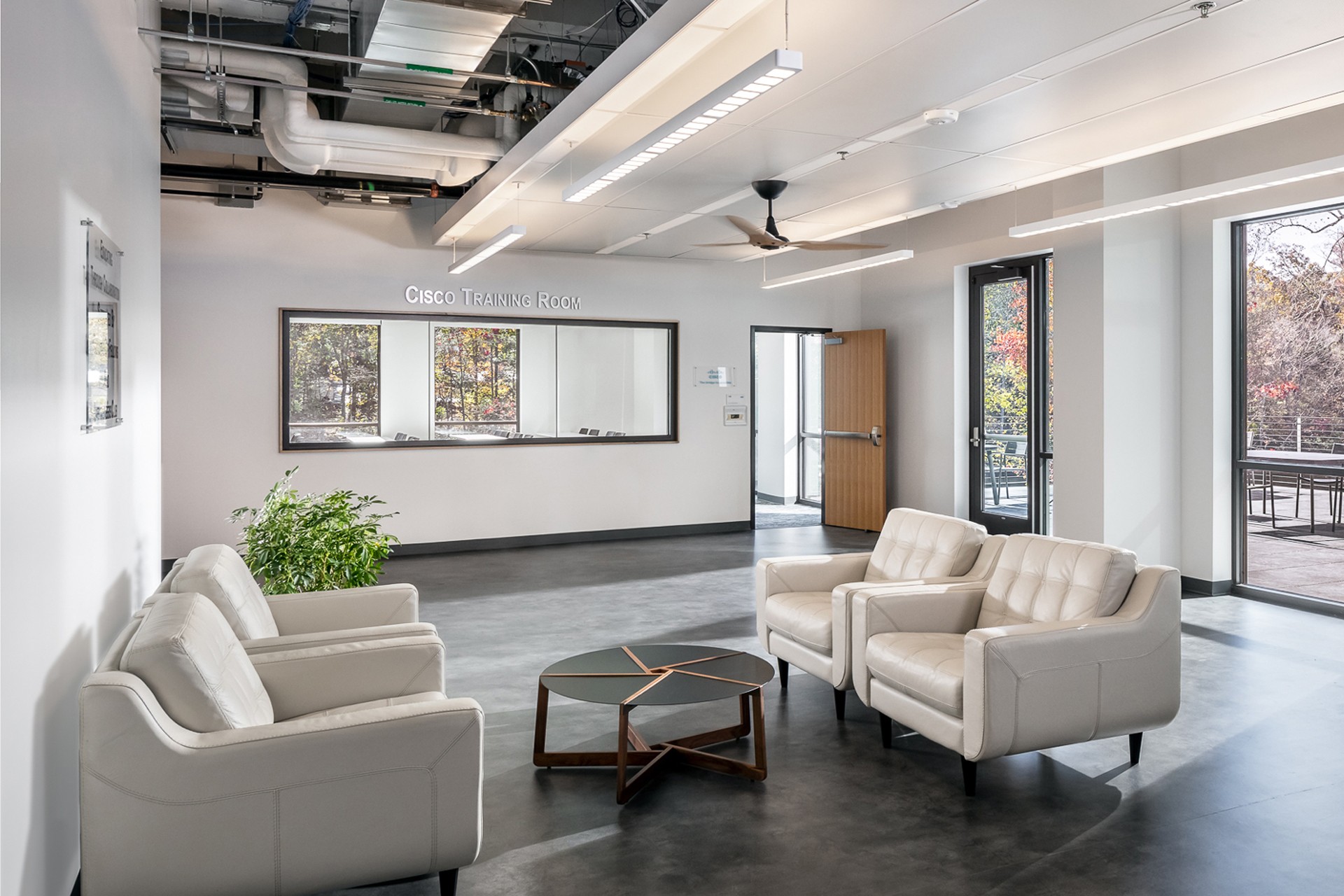
Operational efficiency was a guiding priority from the outset. Because the project relied on donated HVAC&R equipment from multiple manufacturers, our team needed flexible, creative solutions to integrate systems and optimize performance. Through close collaboration and ongoing problem-solving, the team delivered a fully net zero building that exceeds industry standards while operating efficiently and reliably.
Early charrettes with ASHRAE and the design team aligned stakeholders around user experience. Feedback from employee and visitor surveys helped shape the building layout and system integration, ensuring that operational goals supported comfort, productivity and long-term usability.
A key efficiency strategy was strengthening the building envelope to reduce energy loads. During the renovation, our team reconfigured the continuous glazing on the original building and constructed an EFIS system with punched windows to achieve a more sustainable façade. This not only lowered heat gain on the most exposed façades, but it also maintained daylight and views. These improvements reduced demand on the mechanical systems and improved overall building performance.
Passive design strategies further enhanced efficiency and occupant comfort. Window fins reduce glare while high-velocity, low speed fans improve air distribution for heating and cooling. These fans also help manage acoustics, supporting a more comfortable indoor environment without added energy use.
Outside, our team prepared the building to be solar ready, and electric vehicle charging stations support low-carbon transportation and align building operations with broader sustainability goals. Together, these strategies reduce operational energy use, lower long-term costs, and create a high-performance workplace designed for efficiency and resilience.
Categories