Project case study
Four projects leaving a lasting impact across Southern California
This summer and fall, several of our civil operations projects in Southern California are reaching important milestones. From helping a community recover after the Pacific Palisades fire to strengthening flood protection and improving critical transportation corridors, our teams are delivering infrastructure that will serve people and the communities where they live for years to come.
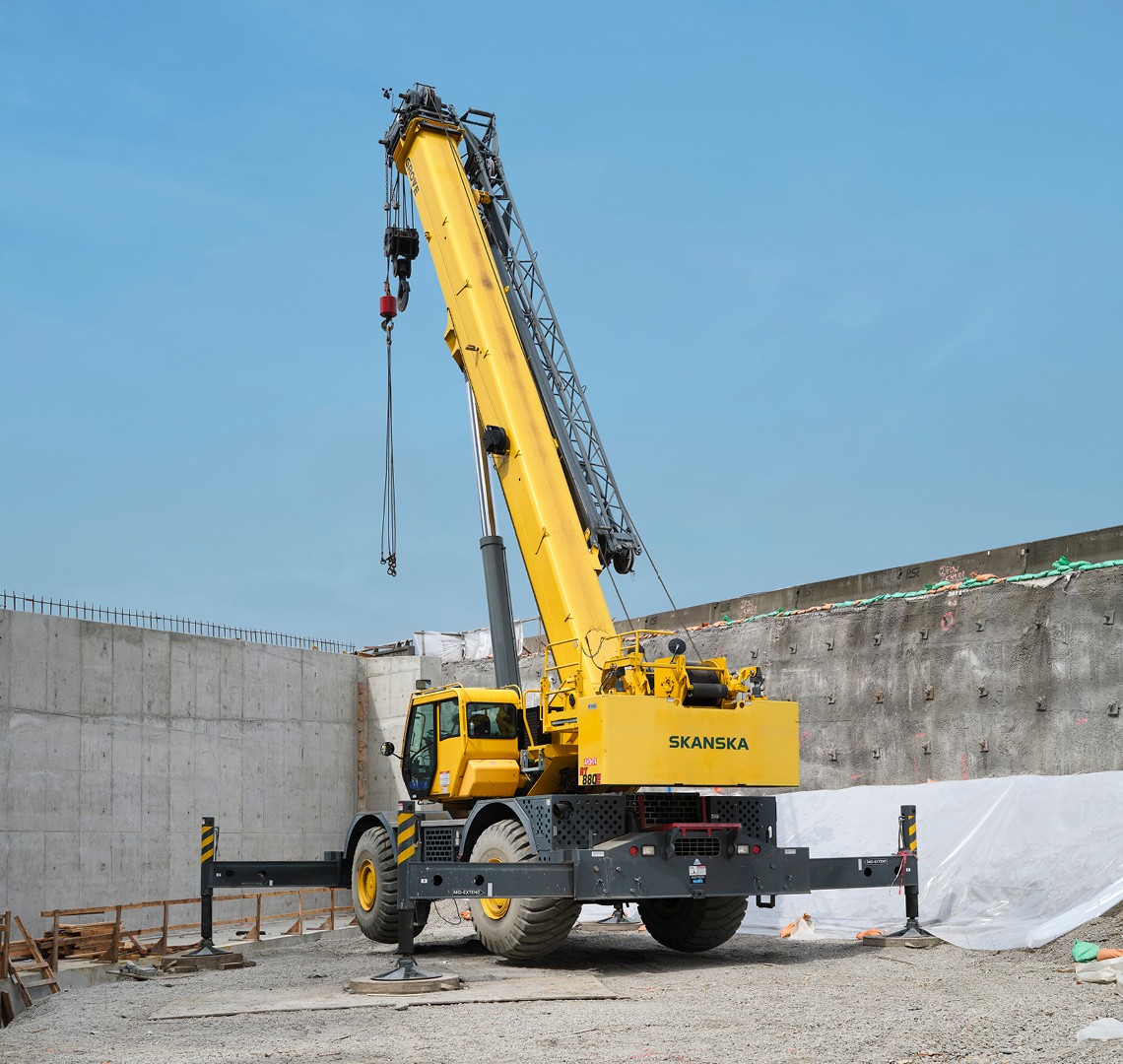
Here’s a look at four projects that were recently completed or are expected to be completed in the coming months.
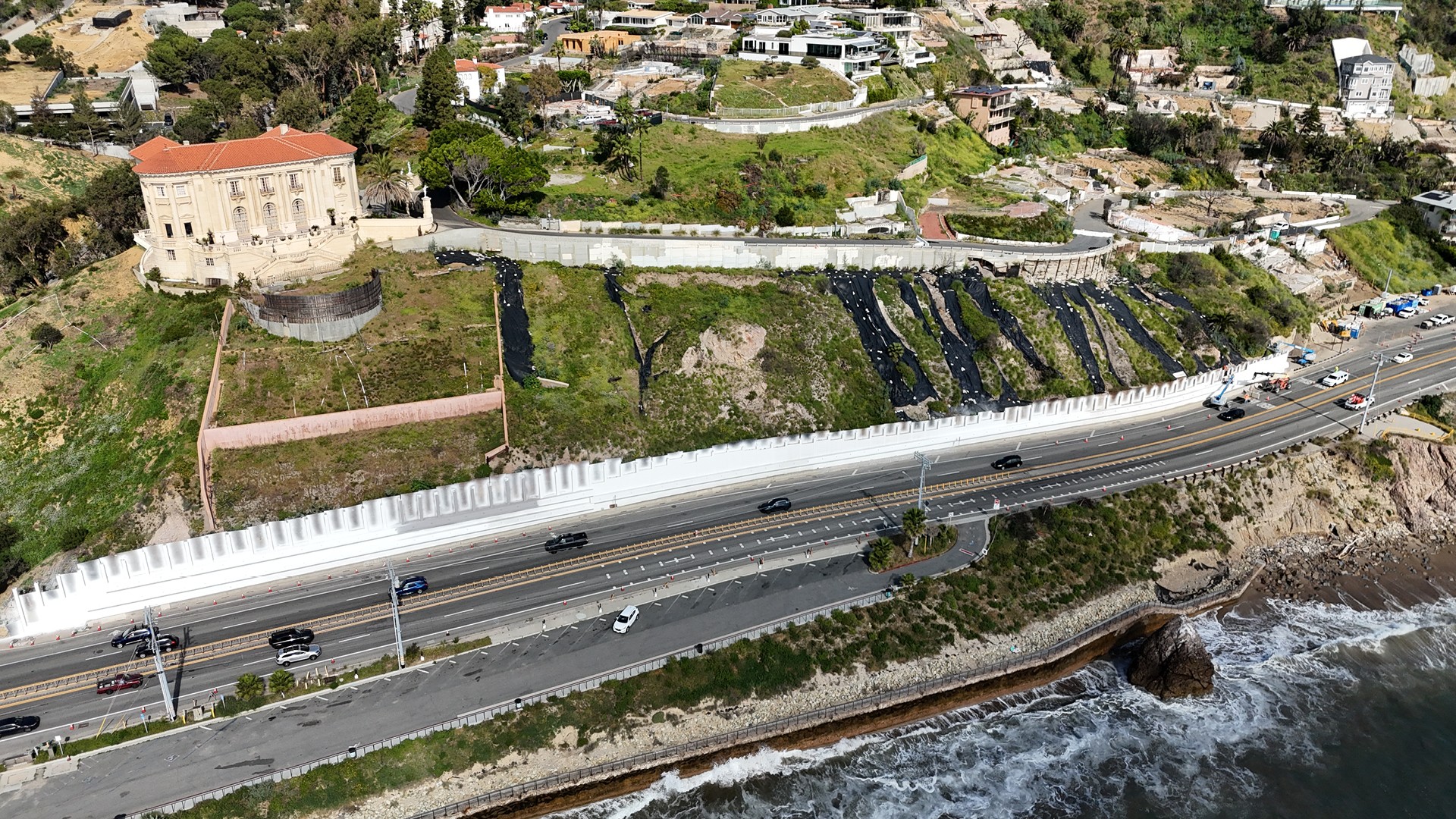
Getty Wall Emergency
Los Angeles, California
In the aftermath of the Pacific Palisades fire, our team joined a fast-moving effort to restore critical infrastructure near the Getty Villa along the Pacific Coast Highway (PCH). The fire damaged a 900-foot beam-and-lagging retaining wall adjacent to the highway, creating an urgent need for repairs.
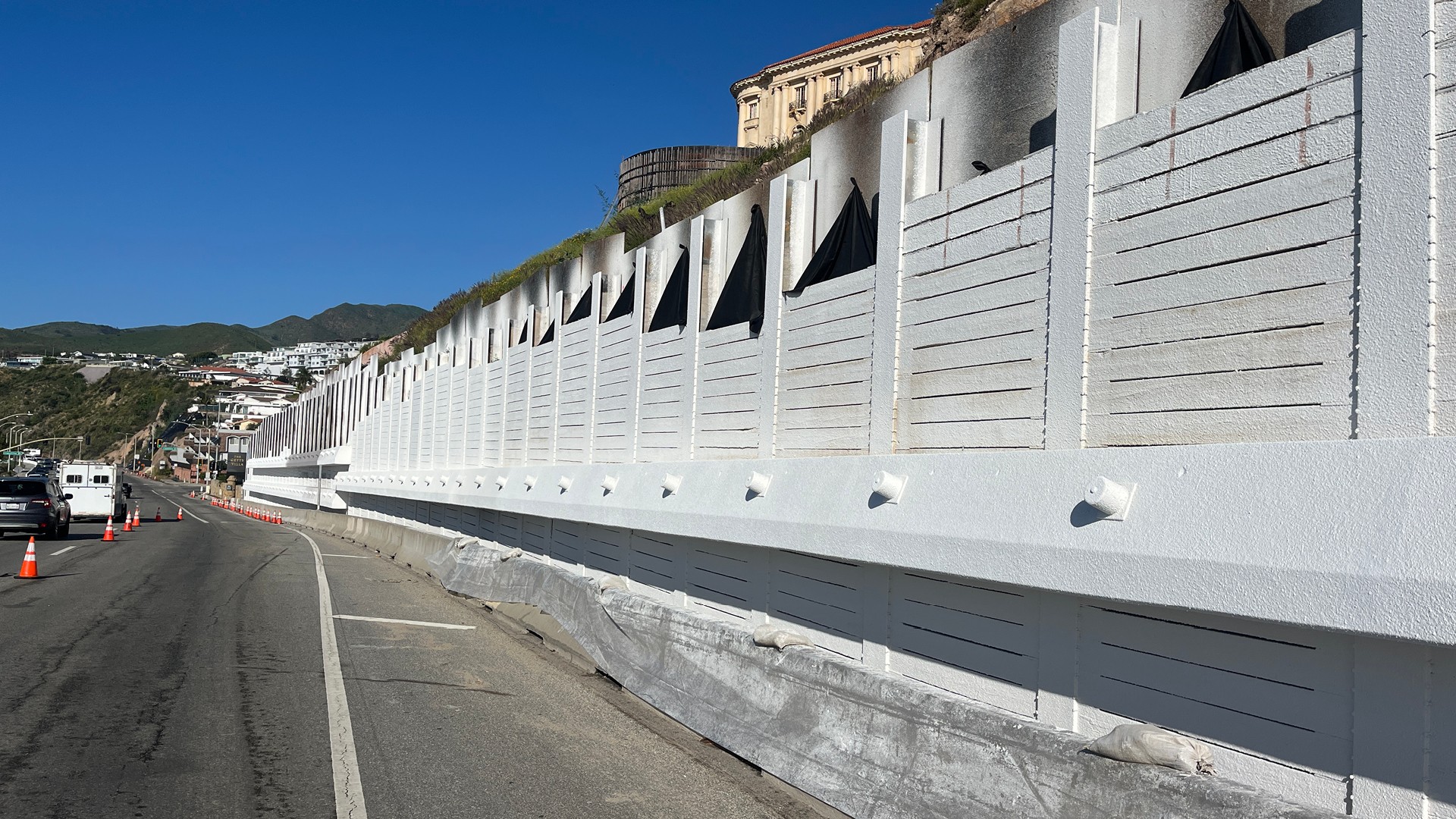
Our team restored the retaining wall system by removing soil and debris, replacing damaged lagging, and removing temporary steel plates installed after the fire to prevent storm runoff from flowing onto the PCH. Crews also coated the wall with a specialized fireproof paint to help prevent fire damage in the future.
Fun facts
- This permanent repair project combined several construction steps in a compact roadside environment.
- The project incorporated a new nanotechnology fireproofing material developed through collaboration between Caltrans and UC Berkeley.
- The nanotechnology fireproofing paint was applied both onsite and offsite to expedite the completion of the project.
“When we first started this project, there was a real sense of devastation. You could see burned structures everywhere and you could feel the deep wound in the community. After completing this project, it felt like a part of the deep wound had been healed and gave all the people who worked on the project a real sense of accomplishment by helping a community get back on its feet,” says Gabe Moorman, assistant project manager.
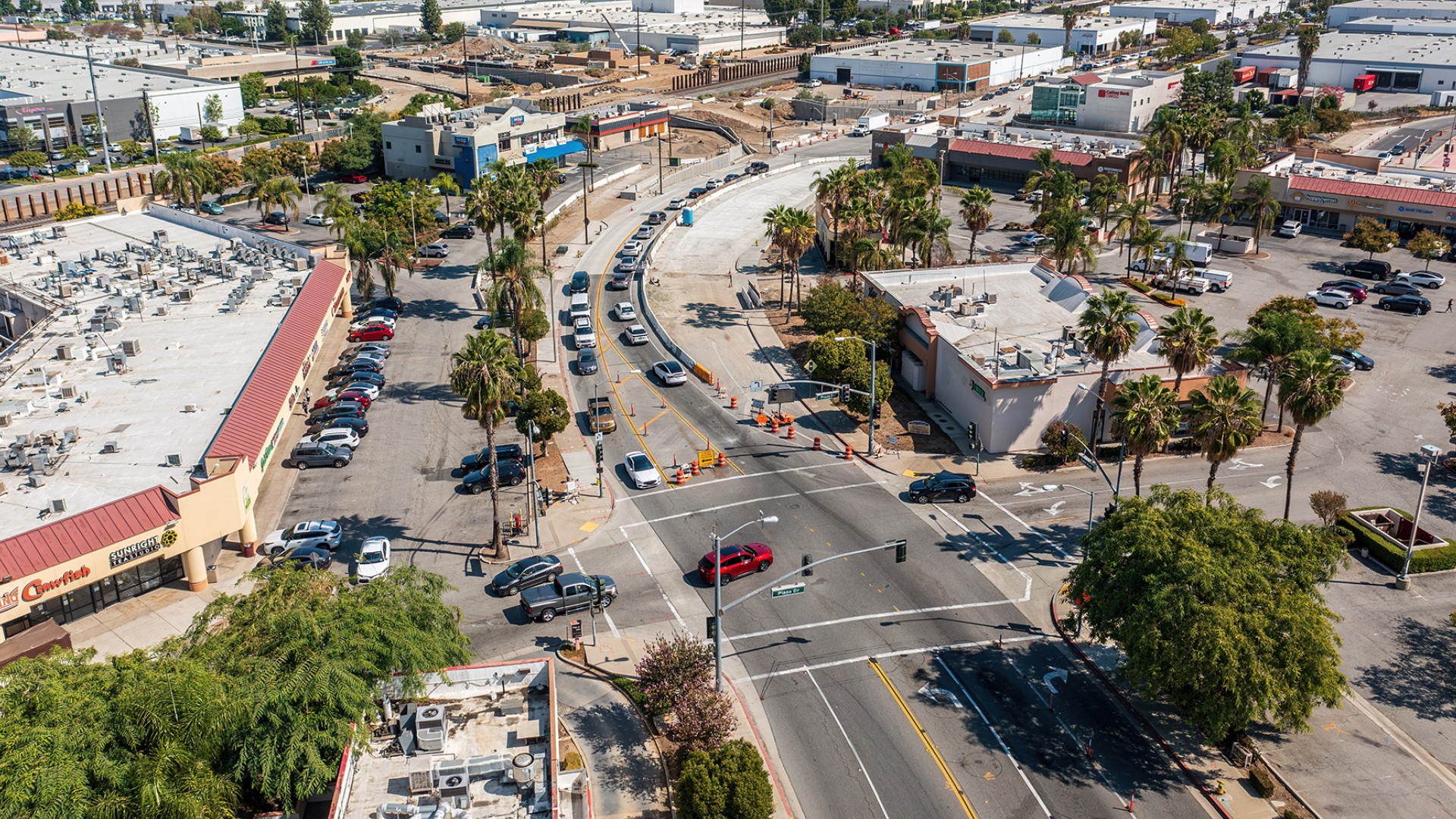
Fullerton Road Grade Separation
City of Industry, California
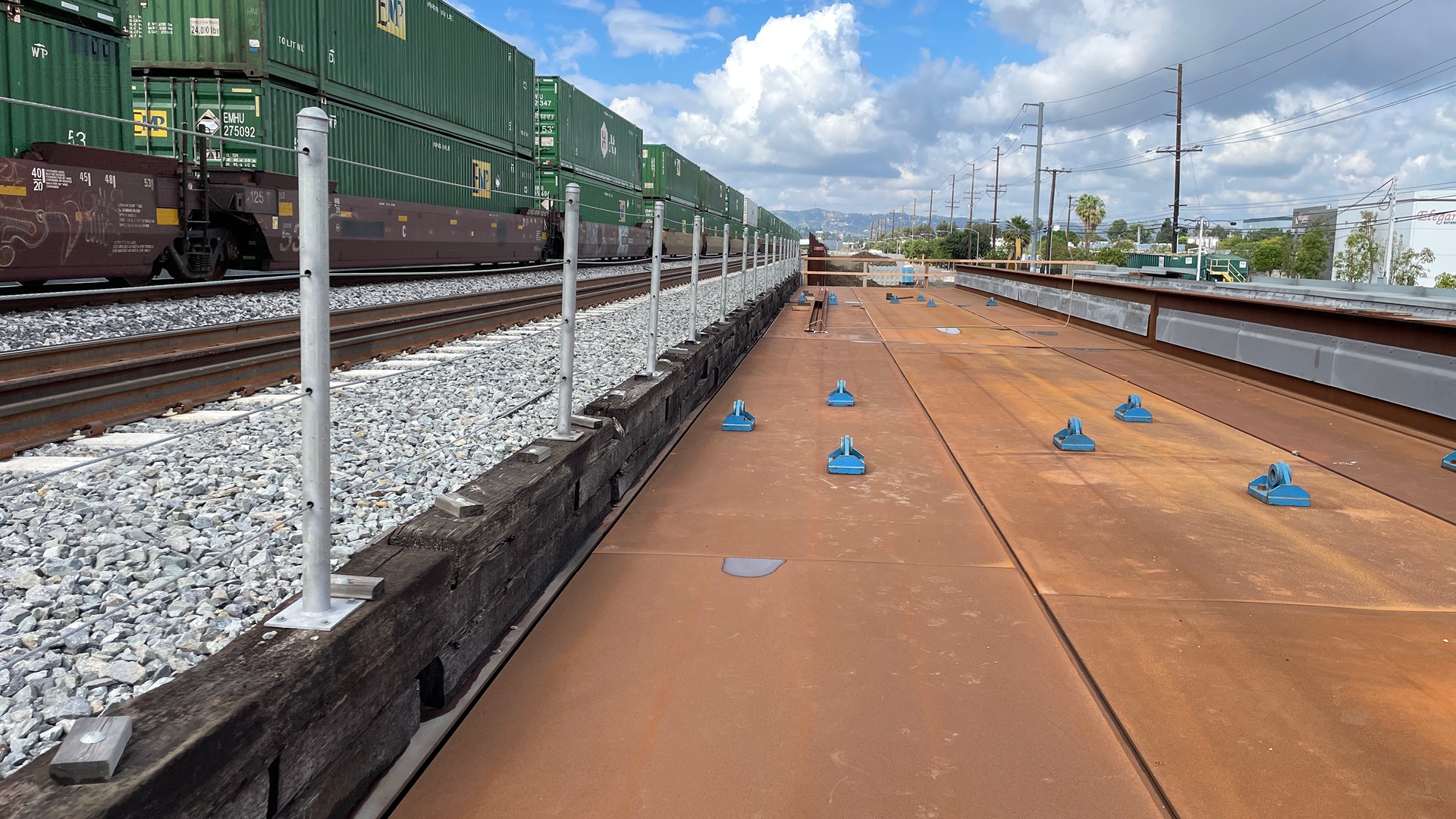
After years of planning and construction, the Fullerton Road Grade Separation project is transforming a critical transportation corridor in Southern California. By separating public traffic from a busy Union Pacific Railroad (UPRR) crossing, the project will improve safety, reduce delays and enhance mobility throughout the region.
This complex project includes lowering the roadway, raising the railroad right-of-way and constructing specialized pumping systems to address challenging groundwater conditions. These improvements will create a more reliable connection for motorists and freight traffic alike.
Project highlights:
- The project is located in the City of Industry, CA, which has only 182 residents.
- Throughout the life of the project, our team members celebrated four marriages, three babies and two grandchildren.
- Approximately 90 trains travel through the corridor every day, totaling more than 32,000 trains each year.
“From the start, our team has committed to delivering this project with a ‘project first’ approach. Through consistent communication and strong collaboration, our Fullerton Road project remains on track for a successful opening in 2026,” says Bill Hearn, project manager.
Riverside Levees Rehabilitation
Riverside, California
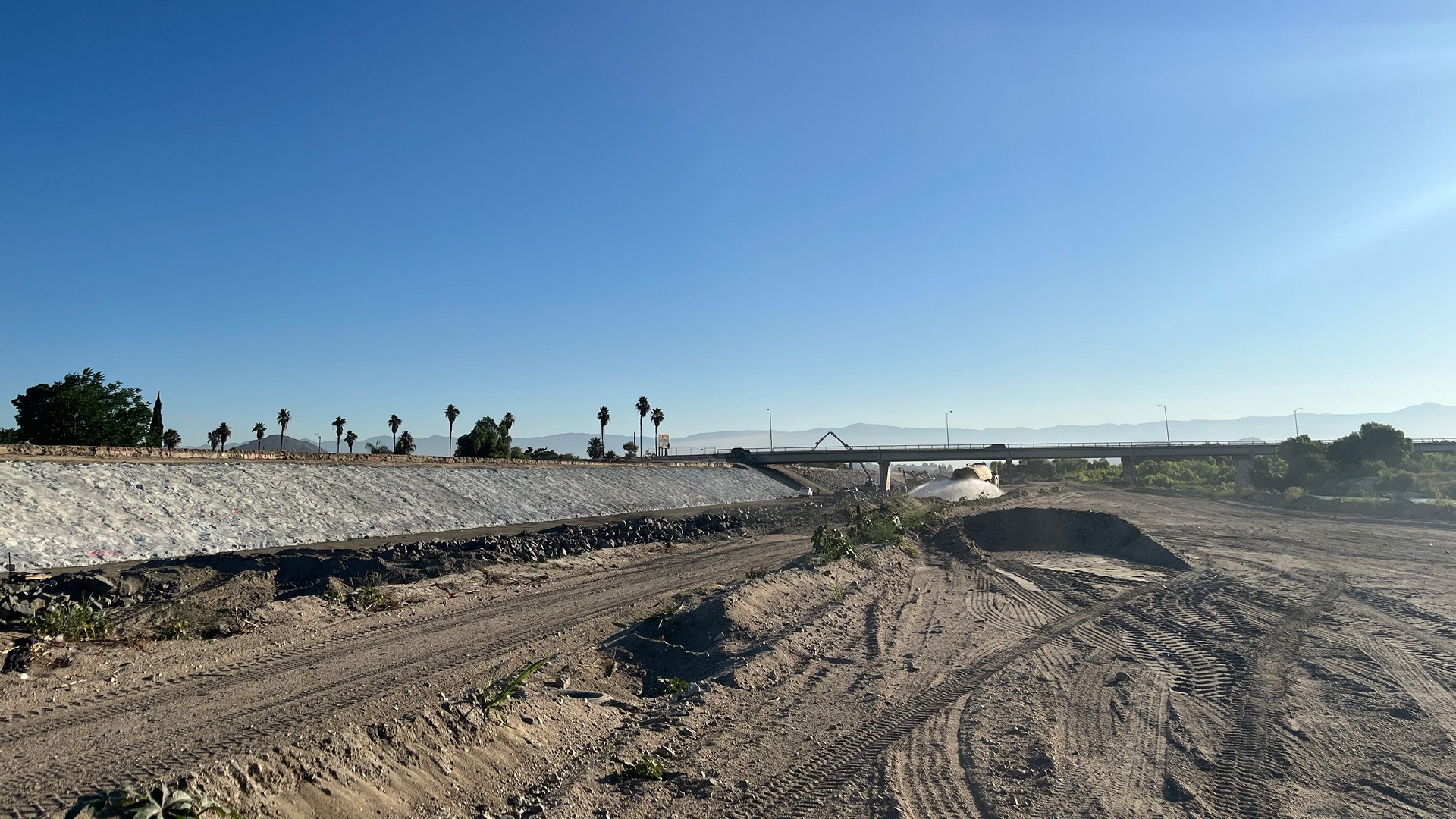
Along the Santa Ana River, our team repaired damaged portions of the levee system between Market Street and Mission Street. This work restored critical flood-protection infrastructure that serves residential, commercial, industrial and public structures, while also supporting ongoing habitat protection efforts.
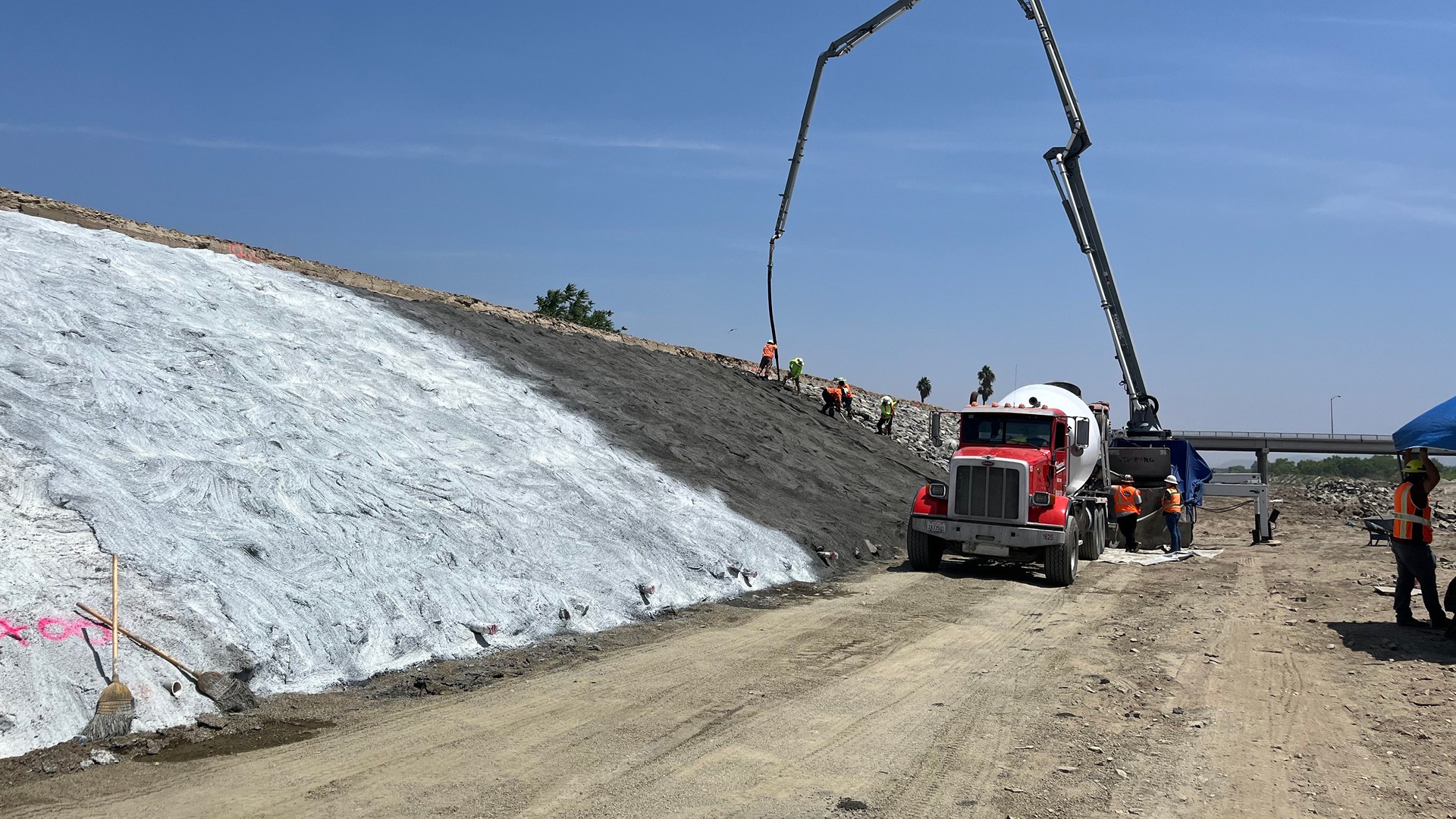
This project included extensive earthwork, toe-fill placement, riprap removal and salvage, and construction of a temporary sound barrier. By leveraging GPS-guided equipment and advanced field technology, crews significantly increased productivity and accelerated project delivery.
Project highlights:
- Crews performed 328,000 cubic yards of excavation as part of the levee rehabilitation work.
- The project included 331,000 cubic yards of toe fill, a major component of restoring the levee structure.
- Teams removed and salvaged 200,000 cubic yards of riprap, preserving rock slope protection material as part of the repair strategy.
“This project was originally scheduled as a three-year construction project followed by one year of landscape maintenance. Using newer GPS-guided equipment and improved field technology, the construction crews significantly increased productivity and completed the work one full year ahead of schedule,” says Dennis Putnam, senior project manager. “This accelerated completion, reduced project duration, lowered overall costs, and allowed the owner to realize the benefits of the completed project much sooner than originally anticipated.”
SR-47 Vincent Thomas Bridge and Front St/Harbor Blvd Interchange Reconfiguration
San Pedro, California
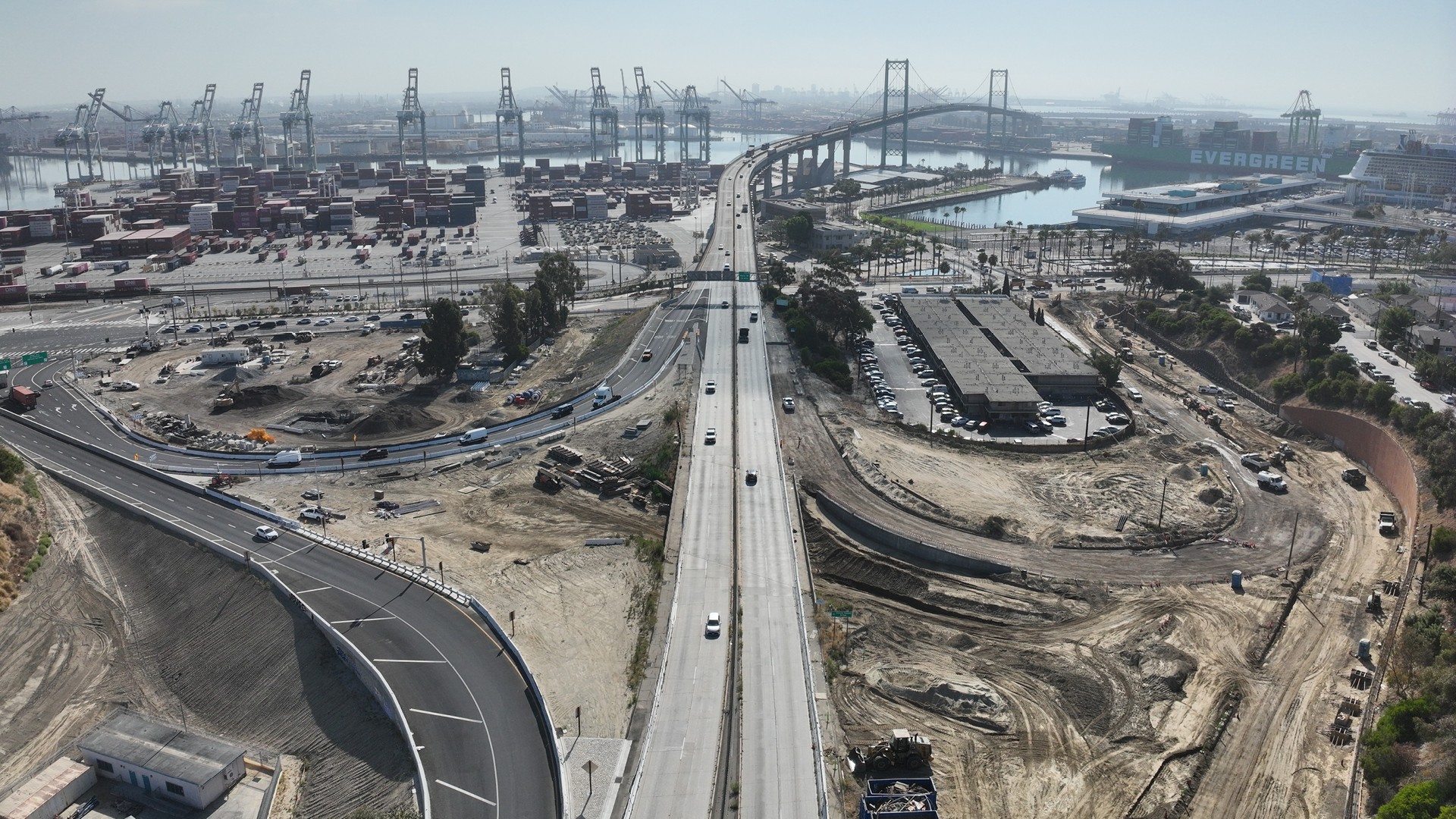
Near the Port of Los Angeles, our team is rebuilding the approaches to the Vincent Thomas Bridge to create a safer and more efficient gateway serving the San Pedro community and one of the nation's busiest port complexes.
This project includes replacing and realigning five on and off ramps, realigning Knoll Drive and upgrading Front Street/Harbor Boulevard. Additional upgrades include infrastructure improvements, lighting and signal enhancements, and the addition of bike lanes and ADA-compliant features.
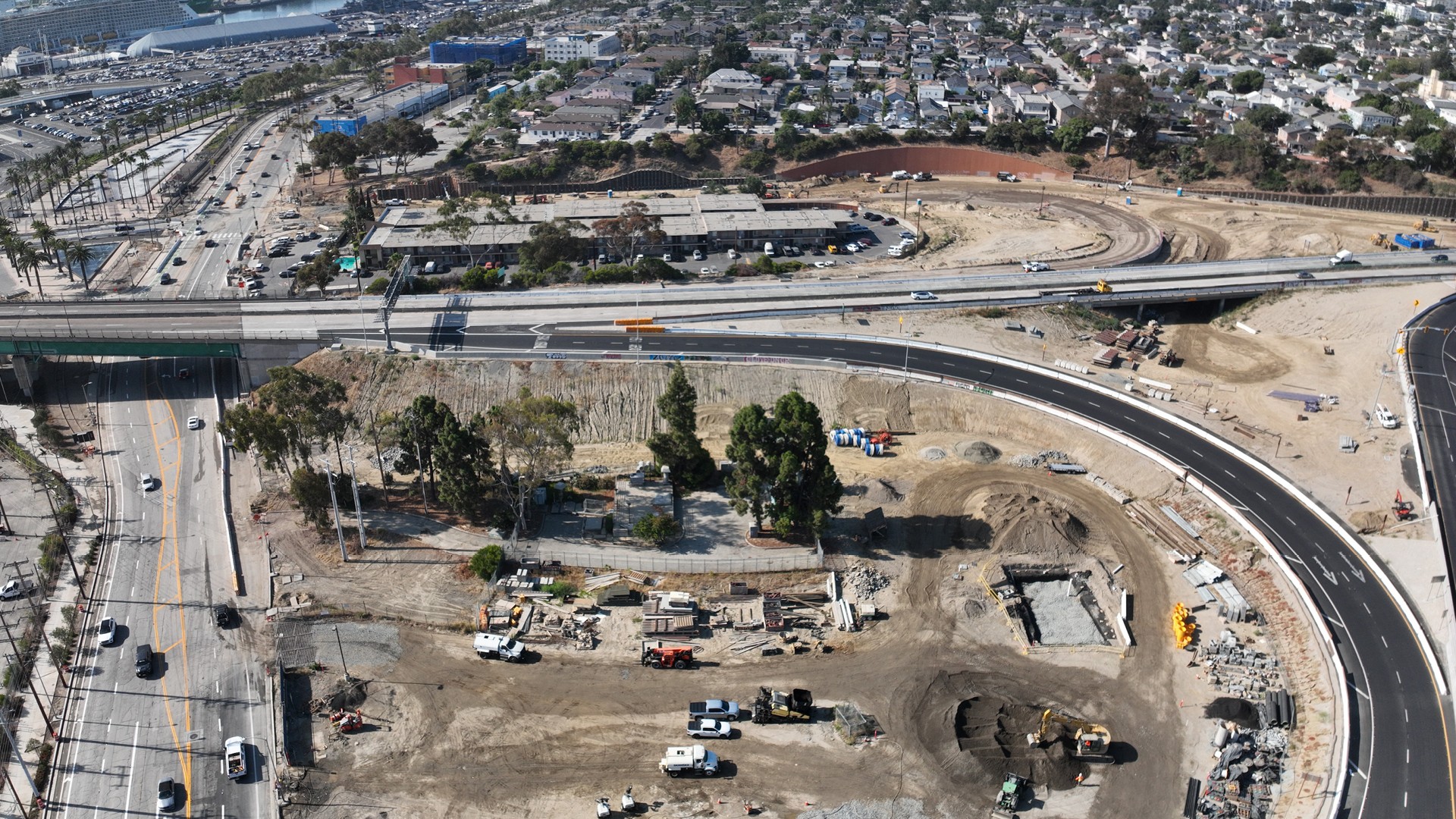
Project highlights:
- This is a rebuild of the bridge approaches, not just a roadway refresh. Crews replaced an existing ramp, constructed a new ramp on the north side of the bridge and removed older ramp infrastructure.
- Much of the work is happening below the surface. The project included earthwork, wick drains, settlement mitigation, utility relocation, drainage upgrades and retaining/soldier pile walls that supported the new roadway configuration.
- The finished project reshaped the bridge approaches. In addition to ramp construction, crews are upgrading Front Street/Harbor Boulevard with storm drain improvements, street lighting, traffic signal updates, bike lanes, ADA-compliant curb ramps and crosswalks.
“It’s incredibly rewarding seeing this project near completion after years of planning, coordination and construction. This project wasn’t just about building new ramps; it was about improving how people and goods move through the country’s busiest ports,” says Jamie Tello, project manager. “By eliminating a long-standing bottleneck, we made it a safer, easier and more efficient gateway for the public. Whether you’re a truck driver moving cargo, a San Pedro resident commuting home, or a family heading to the cruise terminal, these benefits will be felt every day for years to come.”
Categories