Project case study
Portland International Airport (PDX): Delivering long-term value through life cycle thinking
The Portland International Airport (PDX) Terminal Core Redevelopment shows how life cycle thinking and circular design can create long-term environmental, economic and operational value. By focusing on reuse, responsible material choices, and efficient building systems, the project delivers strong performance today while remaining adaptable for the future.
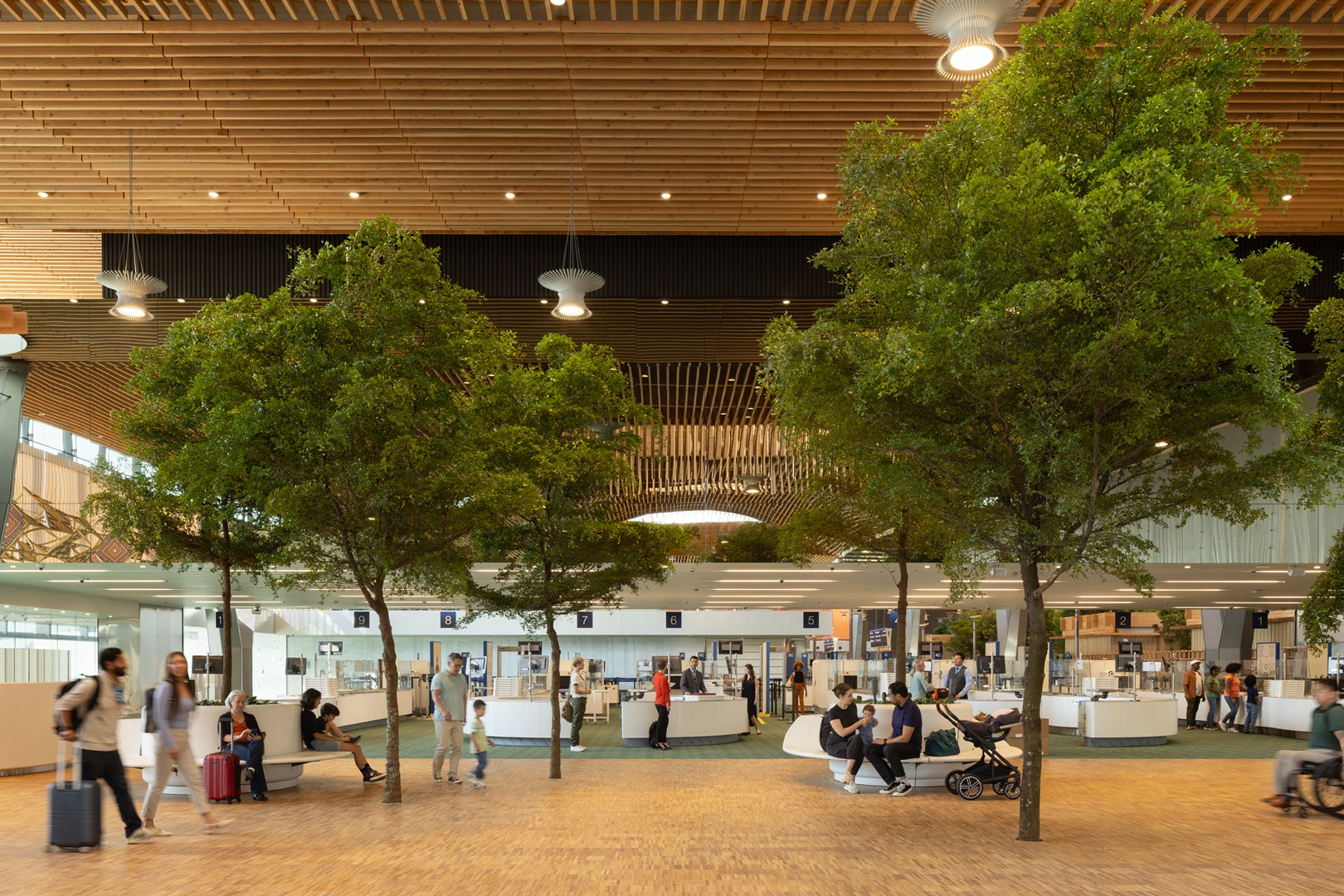
A core strategy in our PDX Terminal Core Redevelopment project was reusing existing infrastructure. By retaining the lower deplaning level and existing foundation, the project reduced the need for new materials and avoided the embodied carbon associated with demolition and reconstruction. This approach also extended the life of existing assets—demonstrating how circular design can minimize waste while saving time and cost.
The terminal’s nine-acre mass timber roof uses 3.5 million board feet of regionally sourced timber, supporting responsible forestry, and local and Tribal supply chains. Innovative procurement and tracking processes helped establish new, replicable supply chain models while lowering environmental impacts.
Life-cycle thinking guided material selection across the project, including the use of lower-carbon concrete mixes. Circular material strategies—such as salvaging lumber for reuse, recycling construction waste, and repurposing wood waste—diverted more than 80% of construction waste from landfill and contributed to a 66% reduction in global warming potential compared to a baseline design.
Operational efficiency was also a priority. Extensive daylighting reduces energy demand and improves passenger comfort, while a ground-source heat pump system significantly cuts reliance on fossil fuels. By using stable underground temperatures to heat and cool the terminal, the system is expected to reduce fossil fuel use by 95% and total energy costs by 50%, delivering lasting operational and carbon savings.
Circular thinking extended to construction logistics as well. Rather than demolishing the existing Concourse Connector, the project team repurposed it to maintain passenger circulation during construction, avoiding unnecessary new construction and its associated embodied carbon. This innovative reuse strategy reduced emissions by an estimated 740 metric tons of CO₂e, underscoring how circular solutions can reduce waste, save time and cost, and create enduring value.
Categories