Resilience
Building a more resilient New York
Anyone living in the New York Metro region in 2012 probably remembers exactly what they were doing when Super Storm Sandy hit.
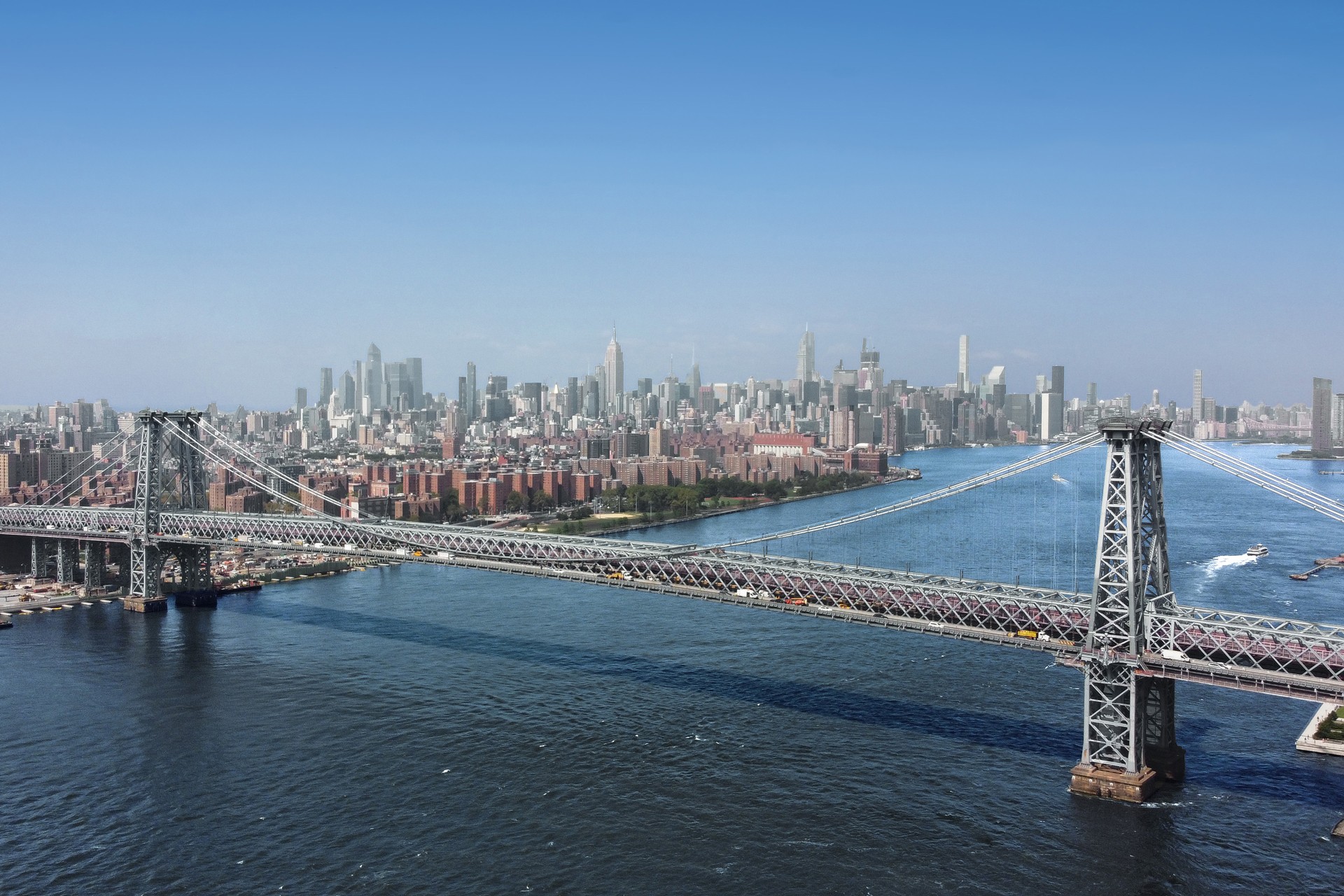
As I was commuting into New York the morning after Sandy hit, it was reminiscent of a scene from a science fiction movie. The city was empty, lights were flickering, and the streets were littered with debris.
Tom Webb, corporate vice president, and I immediately went to several key projects that we knew were higher risk, and we discovered that several of them had been inundated by storm surge floodwaters.
Later that day, news broke about what happened at the Jersey Shore, Long Island and other parts of our area. As I was staring at all the destruction that had hit the New York Metro Region, I couldn’t help but wonder when another storm was going to hit.
That was the moment I realized I want to build projects that ensure our communities and businesses are well protected and resilient to floods and stormwater.
Lessons learned and keys to success
Super Storm Sandy changed the way that Skanska views resiliency in the New York Metro region.
We’ve completed over $1 billion in projects that have not only transformed New York City’s waterfront and parks into fun, vibrant and attractive places for residents and visitors to spend their time, but also repaired and strengthened our city’s coastline to stand up to the looming effects of climate change.
Throughout these resiliency projects, the biggest lesson we’ve learned is the importance of pre-planning. Drilling operations that occur on the waterfront are tedious and lengthy, and being prepared for any disruptive event—including underground obstructions—is critical.
Our self-perform group from the Skanska civil operations side of the business has extensive underground investigative expertise, which is helpful in the pre-planning stage. Having a self-perform capability within Skanska also allows us to better control cost, schedule, safety and project risks. We can mobilize resources immediately to help minimize disruption to local communities.
Constructing resilient projects in the aftermath of Sandy
Below are a few notable waterfront, resiliency and parks projects that Skanska has completed which highlight the breadth of our impact on New York City’s shoreline and the adjacent communities.
Rockaway Boardwalk Reconstruction, Queens, New York
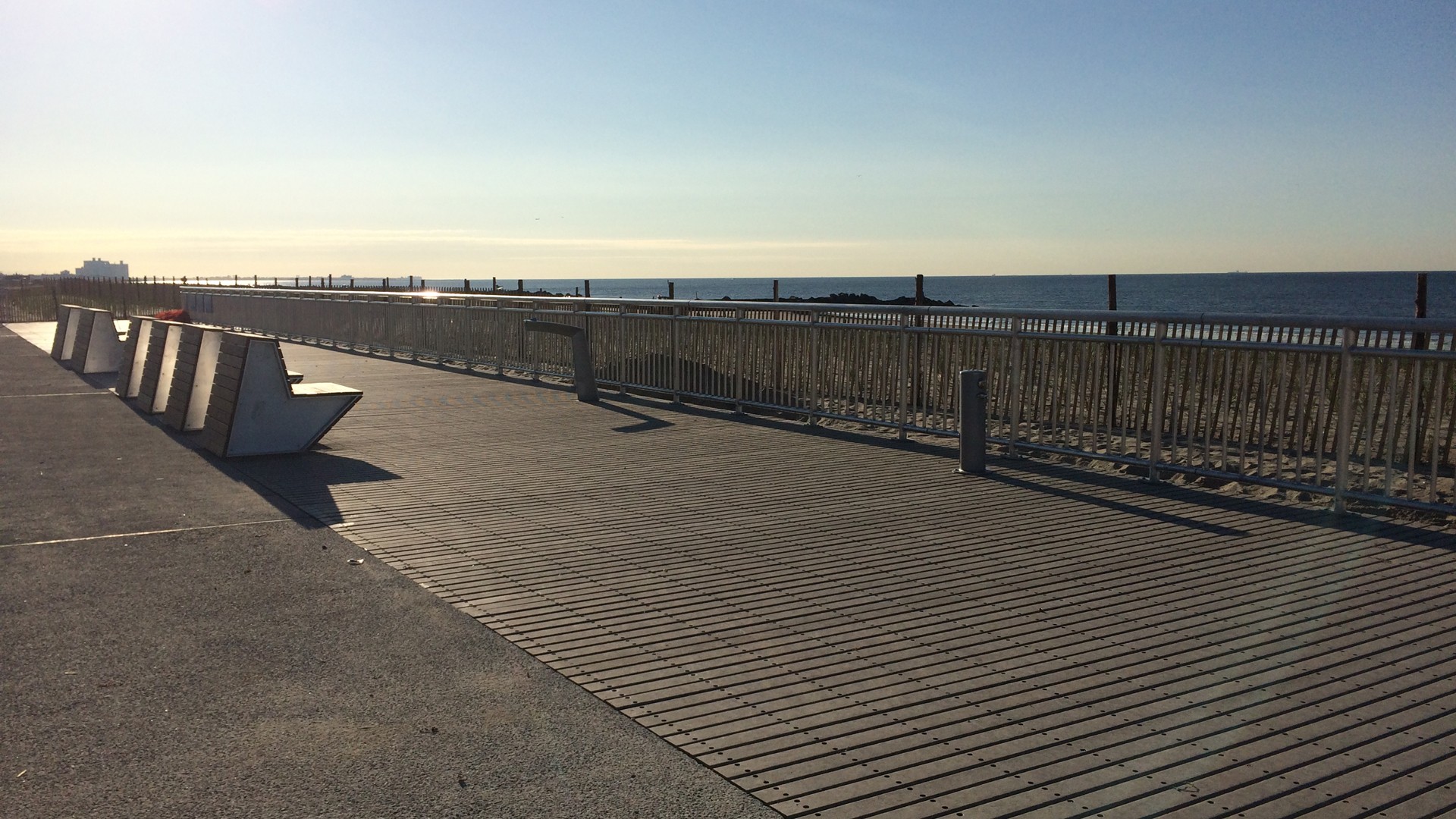
Skanska demolished and rebuilt five miles of boardwalk after much of it was destroyed by Hurricane Sandy, enhancing durability with a steel-reinforced concrete boardwalk on 5,000 steel pipe piles, 5,000 concrete planks and 1,000 concrete pile caps.
We coordinated with the NYCEDC, NYC Parks Department and U.S. Army Corps of Engineers to provide shore protection.
We also elevated the boardwalk three feet above the 100-year flood plain and incorporated a mile of baffle walls that extended four feet below grade and were reinforced by sand berms.
In addition, we provided railings, cast-in-place access ramps and stairs, landscaping, new utilities and site work.
Skanska preserved the boardwalk’s historical integrity through innovative strategies, such as making benches from lumber salvaged from the original structure.
Beginning in April through September of every year, our team coordinated with the EDC and Parks Department to avoid disturbing the breeding grounds of the Piping Plover—a threatened bird species—on the beach.
We also maintained safe beach access at cross streets during the summer, with breaks in our jobsite fence and flaggers at each construction entrance.
In 2018, this project won the American Planning Association’s Silver National Planning Achievement Award for Urban Design.
East Midtown Greenway, New York City
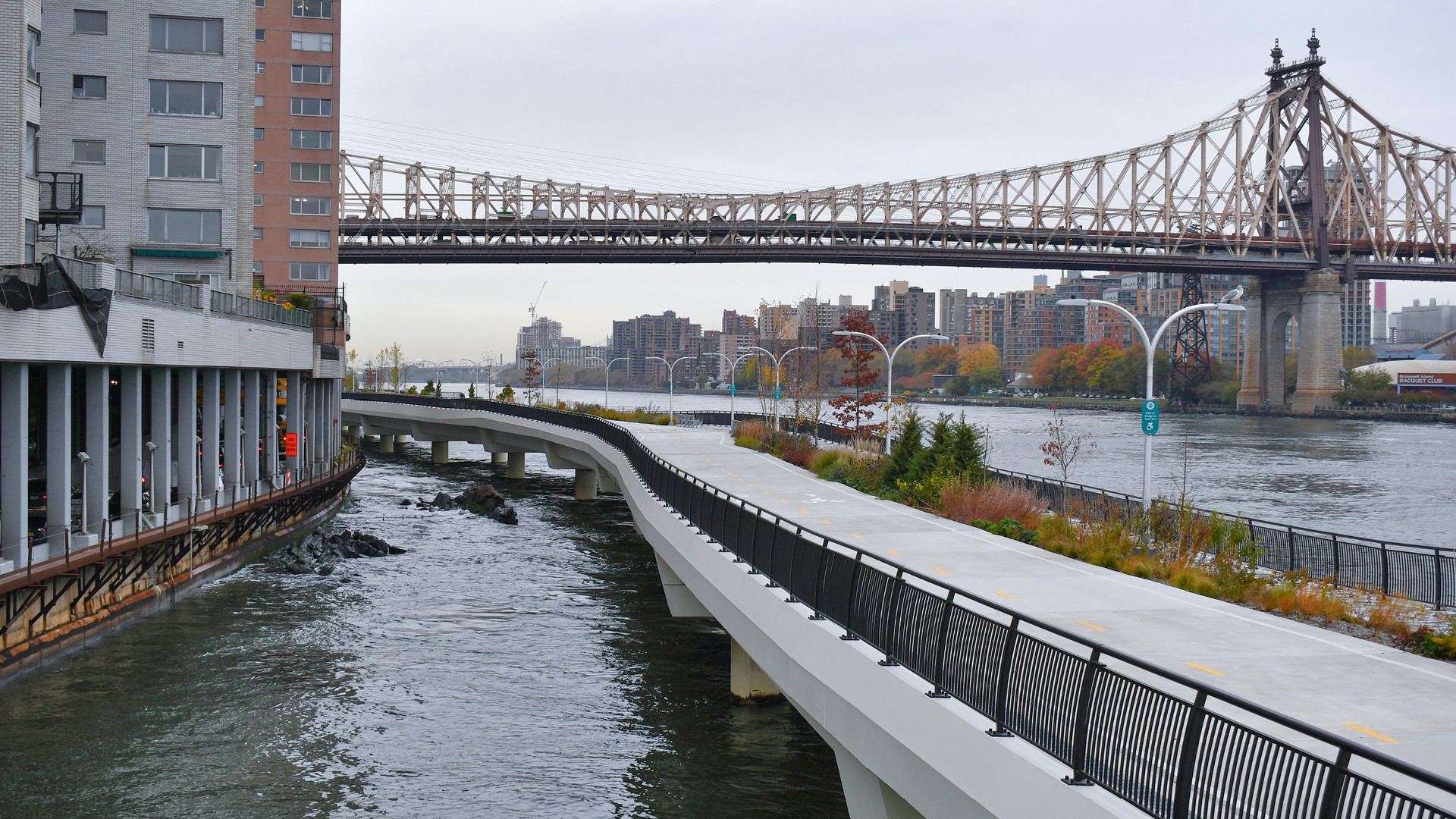
Skanska built the first phase of the East Midtown Waterfront Esplanade and East River Greenway.
This project included the construction of a new in-water structure that serves as a public esplanade along FDR Drive, and a new public park space that spans approximately nine city blocks.
Engineered soil was placed within Silva Cells to collect stormwater and nurture newly planted trees.
After planting, soil was amended with certified compost, which plays an important role in recycling locally sourced organic materials and enhancing the environment by reintroducing important soil nutrients.
The project is part of a larger East River Waterfront esplanade that will stretch for 22 blocks and fill a major gap in the 32-mile Manhattan Waterfront Greenway.
The scope of work consisted of the construction of the public esplanade that’s situated above the East River and spans from East 53rd Street to East 61st Street in Manhattan.
Our team also installed a 115-foot pedestrian bridge at East 53rd Street to provide public access from the adjacent city streets.
LaGuardia Airport Terminal B Redevelopment, Queens, New York
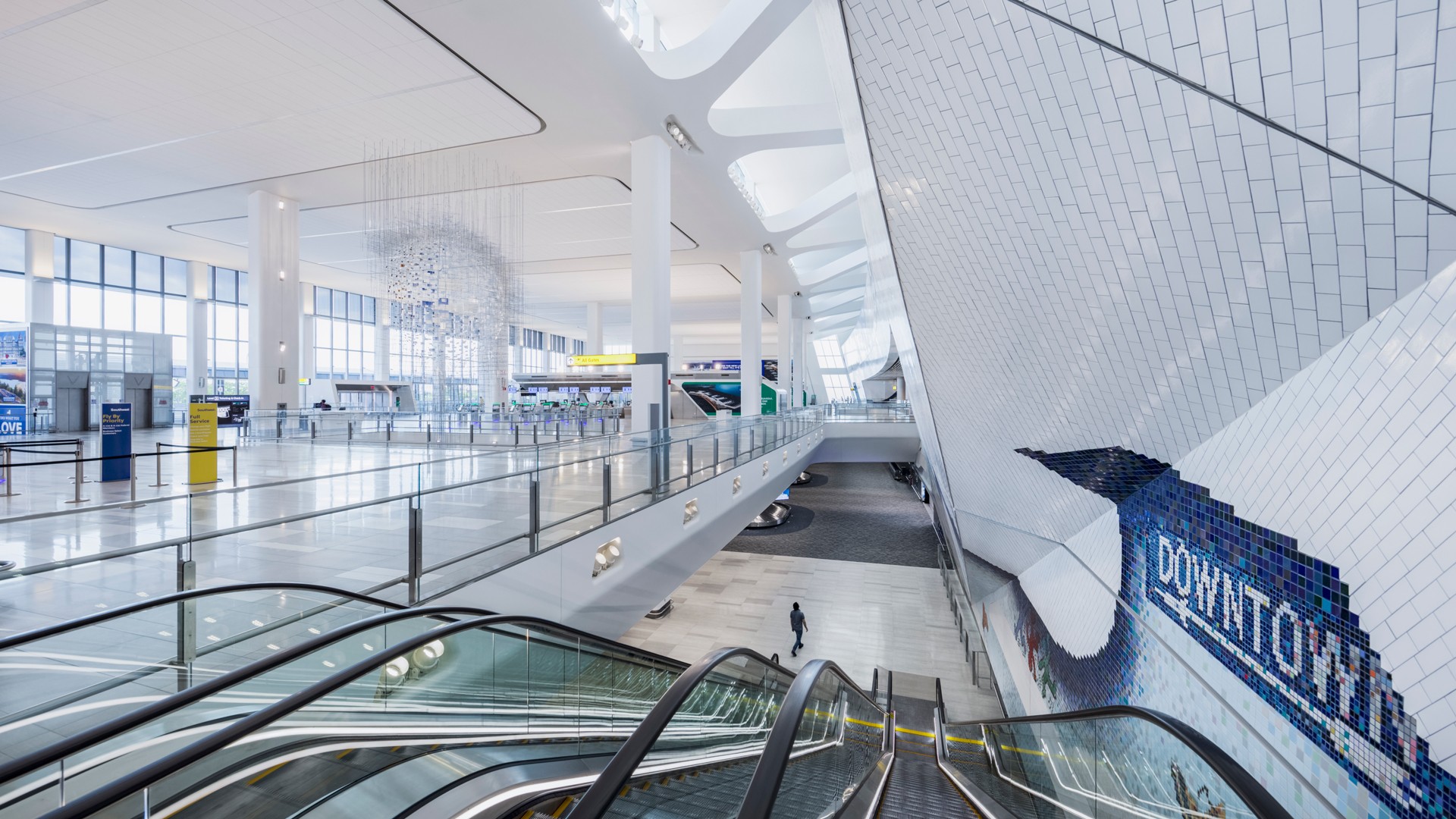
Completed in 2022, LaGuardia Airport Terminal B has earned several sustainability certifications and awards. This new terminal also includes a few standout resilient features to stand up to rising ocean levels and storms.
LaGuardia’s Terminal B is designed to resist the intrusion of flood waters, a strategy known as “dry floodproofing.” The design features flood proof walls and deployable flood barriers.
There are massive pumps placed strategically along LaGuardia’s perimeter that are designed to be submersible, however, the sensitive electrical equipment (such as substations) that powers them still must be protected.
All critical equipment was elevated off the first floor, including generators, air handling units and other mechanical and electrical equipment.
NYCEDC Citywide Ferry Service Program, New York
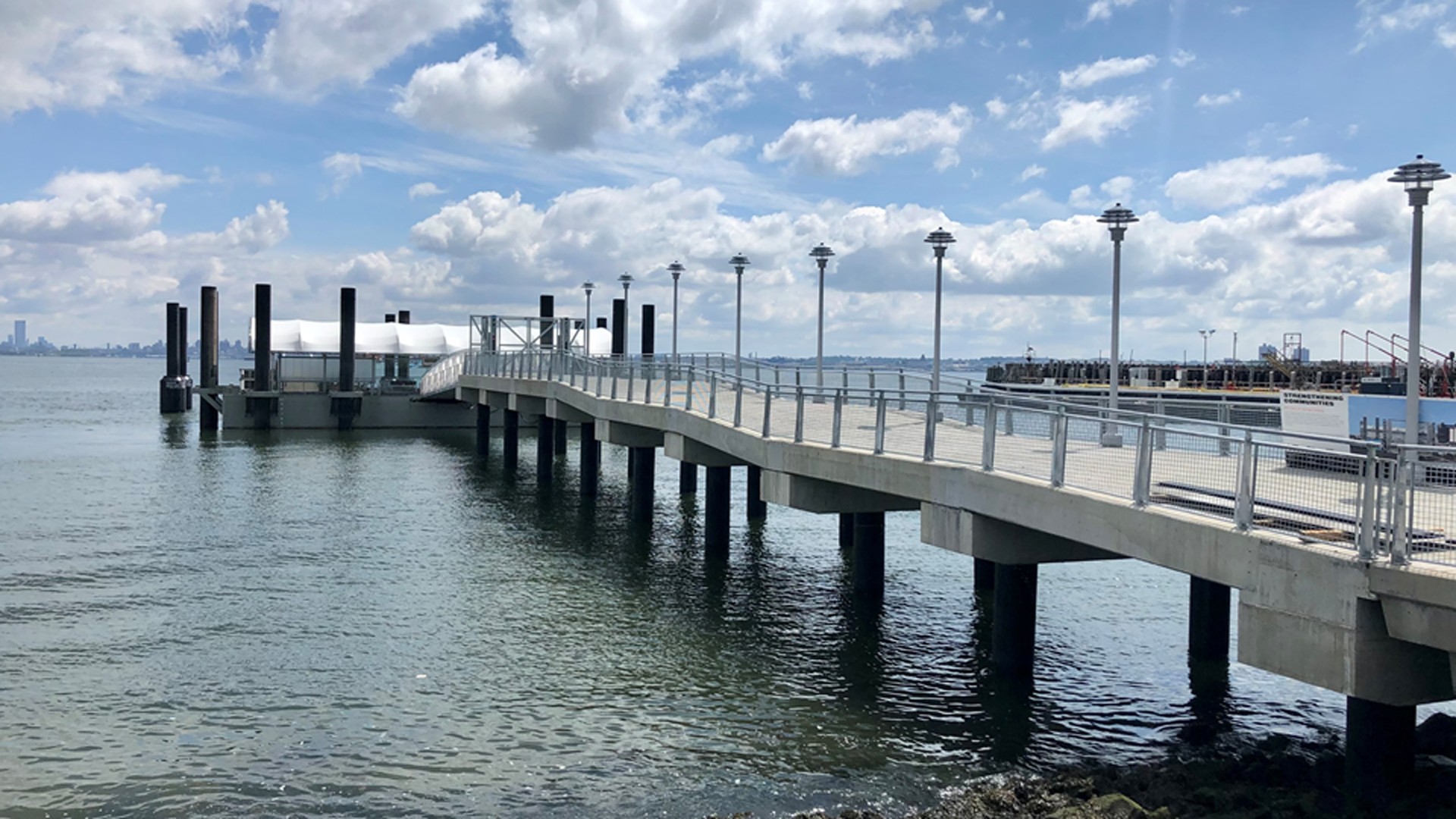
Skanska provided construction management services for the renovation and new construction of commuter ferry landings spanning to all five boroughs in New York City, Manhattan, Brooklyn, Queens and Staten Island.
This overall project included the demolition of four commuter ferry landings and installation of 19 ADA accessible, 90’x35’ barges with canopies and windscreens.
Phase One of the project was completed in 2017, which provided service to Astoria, South Brooklyn and Rockaway, and Phase Two was completed in July 2018, which provided services to Soundview and the Lower East Side.
A third phase was completed in 2021, which included the construction of five additional landings, tying in Staten Island to the ferry system.
Skanska worked closely with McLaren Engineering Group to identify high-quality materials and design solutions to support 1.3 million annual riders and anticipated future growth, that would withstand long-term use.
The design upgraded the New York City Ferry system’s ability to withstand extreme environmental events and facilitate quick responses due to its inherent flexibility—from both an engineering standpoint and an operational one.
The isolation of the floating barge structure from upland components, design of minimally restrained gangways, and inclusion of contingency features all contribute to improving functionality and durability when faced with extreme conditions.
The floating barge is the primary means of protecting the terminal against damages that could jeopardize ferry service after extreme storm events.
Looking ahead
More than a decade after Super Storm Sandy, investments in resilient infrastructure remain essential to protecting New York's communities, economy and environment.
Whether we're strengthening waterfronts, improving transportation networks or advancing projects like the Governors Island Substation or the upcoming New York Climate Exchange Climate Campus, our work continues to support a more resilient and sustainable New York.
I'm looking forward to seeing how our teams will help shape NYC's future for generations to come.
Categories
Written by
Buildings
Sean Szatkowski
Executive Vice President, General Manager