Thinking big
Procurement for impact: from lowest cost to life-cycle value
Our Procurement for Impact report argues that how society buys infrastructure matters as much as how we build it. The Lower Thames Crossing shows what's possible when carbon reduction and long-term value are written into the contract.
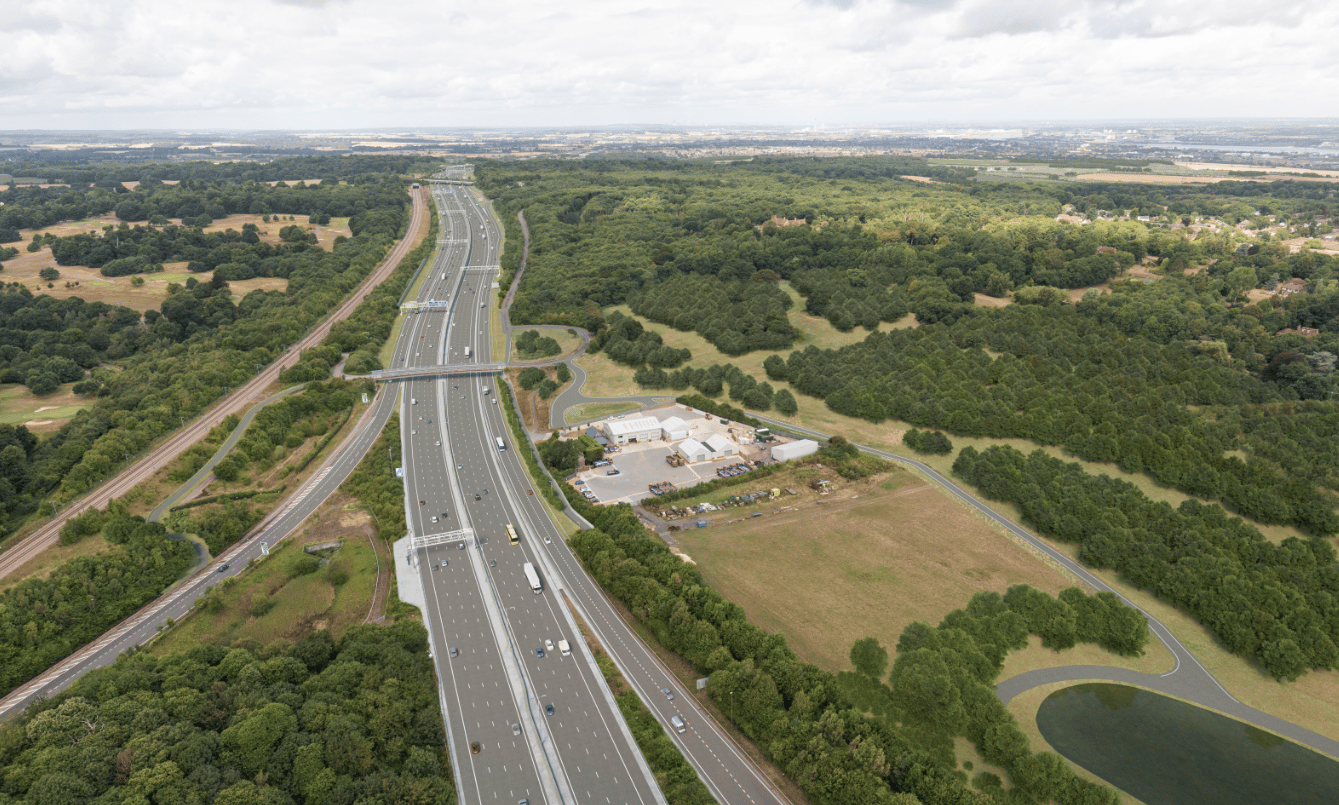
The Lower Thames Crossing (LTC) is among the United Kingdom’s most ambitious infrastructure projects. The 23km road and tunnel connecting Kent and Essex will nearly double road capacity across the River Thames, carrying approximately 140,000 vehicles every day.
But ambition doesn’t stop at engineering. The groundbreaking procurement process run by National Highways embedded sustainability targets in law: the Development Consent Order legally requires a 50% reduction in carbon against a 2020 baseline. Contractors applying to work on the project were brought in before final design and construction to show exactly how they’d get there – demonstrating plans to minimize whole-life carbon emissions across materials, construction and maintenance. The approach allowed for collaborative design refinement and early integration of low-carbon solutions. It should also enable the project to raise finance at preferential rates from institutions with ambitious targets for sustainability-linked lending
“The customer’s stated vision is to change industry for the better, so that this becomes the norm,” says Chris Ottley, Project Director at Skanska. “Low-carbon construction has typically been viewed as an extra, but by leveraging the procurement process you can begin to make it the baseline.”
The Lower Thames Crossing is one of a growing number of Skanska projects using more collaborative, life-cycle-oriented and outcome-focused approaches to procurement. Four are featured in the 2026 edition of our report, Procurement for Impact: Skanska’s Vision for a Competitive, Sustainable EU, including the regeneration of Stockholm’s Meatpacking District, Norway’s Lindesnes Care Center and Health Building, and JFK Roadways, Utilities and Ground Transportation Center in the USA.
The report highlights the potential for procurement to support Europe’s long-term resilience and competitiveness. One of its central findings is that public procurement focused solely on the lowest upfront cost can overlook wider societal, environmental and financial benefits. Purchase price represents only a fraction of whole-life cost once maintenance, energy consumption, emissions and end-of-life impacts are factored in.
“As Europe faces climate transition pressures, geopolitical uncertainty and growing infrastructure investment needs, procurement is increasingly becoming a strategic lever for strengthening competitiveness, resilience and industrial capacity,” write Anders Danielsson, President and CEO, Skanska Group, and Lena Hök, Executive Vice President Sustainability and Innovation, in the report’s foreword. “Our ambition is to contribute to a discussion where procurement is viewed not only as a technical or administrative process, but increasingly as a strategic tool for Europe’s future.”
Sustainability objectives
Skanska’s role in the Lower Thames Crossing covers Kent Roads – all approach roads south of the River Thames. This includes connecting the A2/M2 to the tunnel entrance by constructing approximately 6.5km of new roads and structures. We’ll also deliver one of Europe’s widest wildlife bridges, designed to bring long-term benefits to both the local community and the environment.
To meet its sustainability objectives, the team has created a new 100,000 sq m (25-acre) ecological habitat near Thong village, taken on three local apprentices, and trialed a JCB hydrogen digger – the first deployed on a live construction site anywhere in Europe. Over the course of the project, we will offer at least 50 apprenticeships, and six emission-free machines will arrive on site this summer. The latter is a feature of the project: National Highways created a fund to enhance contract value for teams willing to adopt novel or more expensive low-carbon solutions.
While the Lower Thames Crossing provides cause for optimism, it remains an outlier. Our report finds that public procurement in general remains limited by outdated rules and a system that prioritizes lowest price over long-term value. Climate and circularity considerations remain optional and rarely applied, as procurement is still viewed as transactional rather than a strategic driver. This mindset suppresses innovation and disadvantages those who lead on quality and sustainability.
Inconsistent application across EU Member States further fragments the market, making it harder to scale effective practices and technologies. This holds back demand for low-carbon, resilient solutions that align with Europe’s climate ambitions.
Five recommendations
The Procurement for Impact report makes five recommendations for how procurement frameworks can better support competitiveness, sustainability, resilience and long-term value creation. They are:
1. Move from voluntary to mandatory inclusion of climate, circularity and resilience criteria in all public tenders.
2. Encourage contracting authorities to assess long-term social, environmental and economic value – not just upfront cost.
3. Promote tendering procedures that support innovation and collaboration – backed by clearer guidance to ease implementation.
4. Equip public buyers with the tools, training and resources to apply sustainability criteria effectively.
5. Enable coordinated procurement of climate-critical solutions like renewable materials, low-carbon infrastructure and resilient design. Encourage peer learning among public authorities, and align buyers and suppliers around shared innovation and performance goals.
There is much more in the report, including project examples, financing methods and policy insights. You can download a copy below.
Download the report today
Categories