Projects
Keeping London moving while helping to build HS2
Our Logistics Hub is helping us to support the delivery of HS2 in London in a smarter, more responsible way.
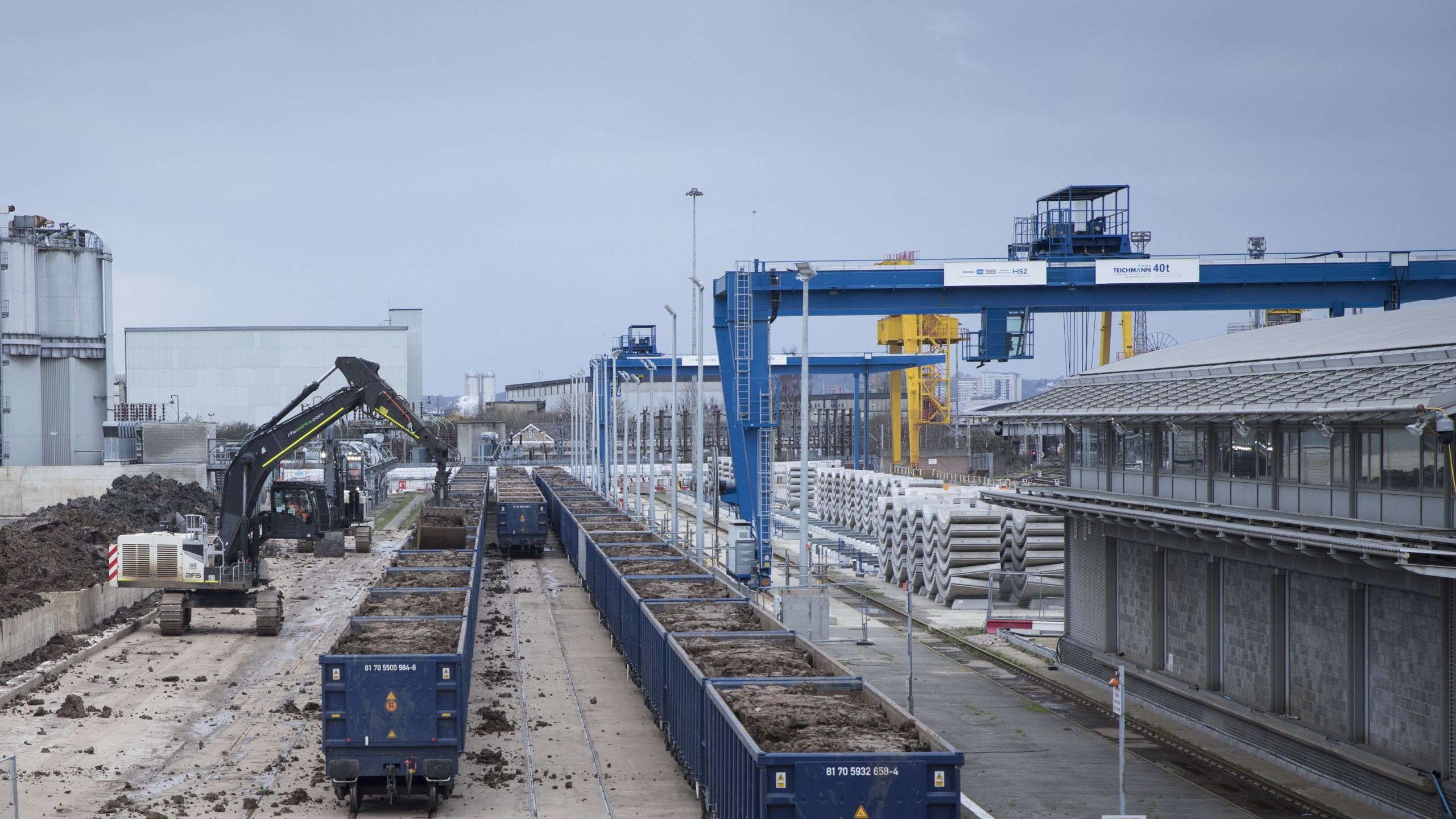
'The beating heart of HS2 in London'
Our Logistics Hub at the Willesden Euro Terminal (WET) is helping us to support the delivery of HS2 in London in a smarter, more responsible way.
Coined ‘the beating heart of HS2 in London’ the 30-acre logistics operation is a key part of how materials, equipment and excavated spoil are moved to and from HS2 sites across the capital. This includes those operated by our Skanska Costain STRABAG joint venture, as well as those run by other contractors.
By using rail instead of road for many journeys, it helps reduce construction traffic on London’s roads, an estimated one million lorry movements, and supports more efficient project delivery.
That matters on a project of this scale. Building major infrastructure in a busy urban environment means we need to carefully manage how sites are supplied while reducing disruption for local communities. Fewer vehicle journeys improves safety by reducing the number of heavy vehicles travelling through busy areas used by pedestrians and cyclists.
Mega logistics
The London tunnels section of the project that we’re delivering requires 5.6million tonnes of earth to be excavated. After being processed at the Willesden site, it’s taken by train to three locations across the UK; Barrington in Cambridgeshire, Cliffe in Kent and Rugby in Warwickshire.
At these locations, it’s being put to good reuse, filling voids that will be used as the basis for residential and commercial development. The site is also receiving by rail over 100,000 precast tunnel segment rings for use in forming the walls of the London tunnels. At peak production, eight trains per day arrive or depart from the hub.
There are environmental benefits too. Moving more materials by rail cuts emissions, noise and air pollution compared with relying more heavily on road haulage.
Through the logistics hub, we are managing and distributing materials in a more coordinated way, helping teams work effectively across multiple construction sites. However, it’s more than a transport facility. It’s a practical example of how we are working to deliver complex infrastructure responsibly — reducing traffic, lowering environmental impact and helping keep London moving while we build for the future.
Categories