Climate-smart solutions
Biophilic design at H₂Offices. From concept to everyday experience
Biophilic design starts with a simple idea. People feel better when they are close to nature. When these principal guides architecture from day one, the result feels fundamentally different. Not louder. Not more complicated. Just more human.
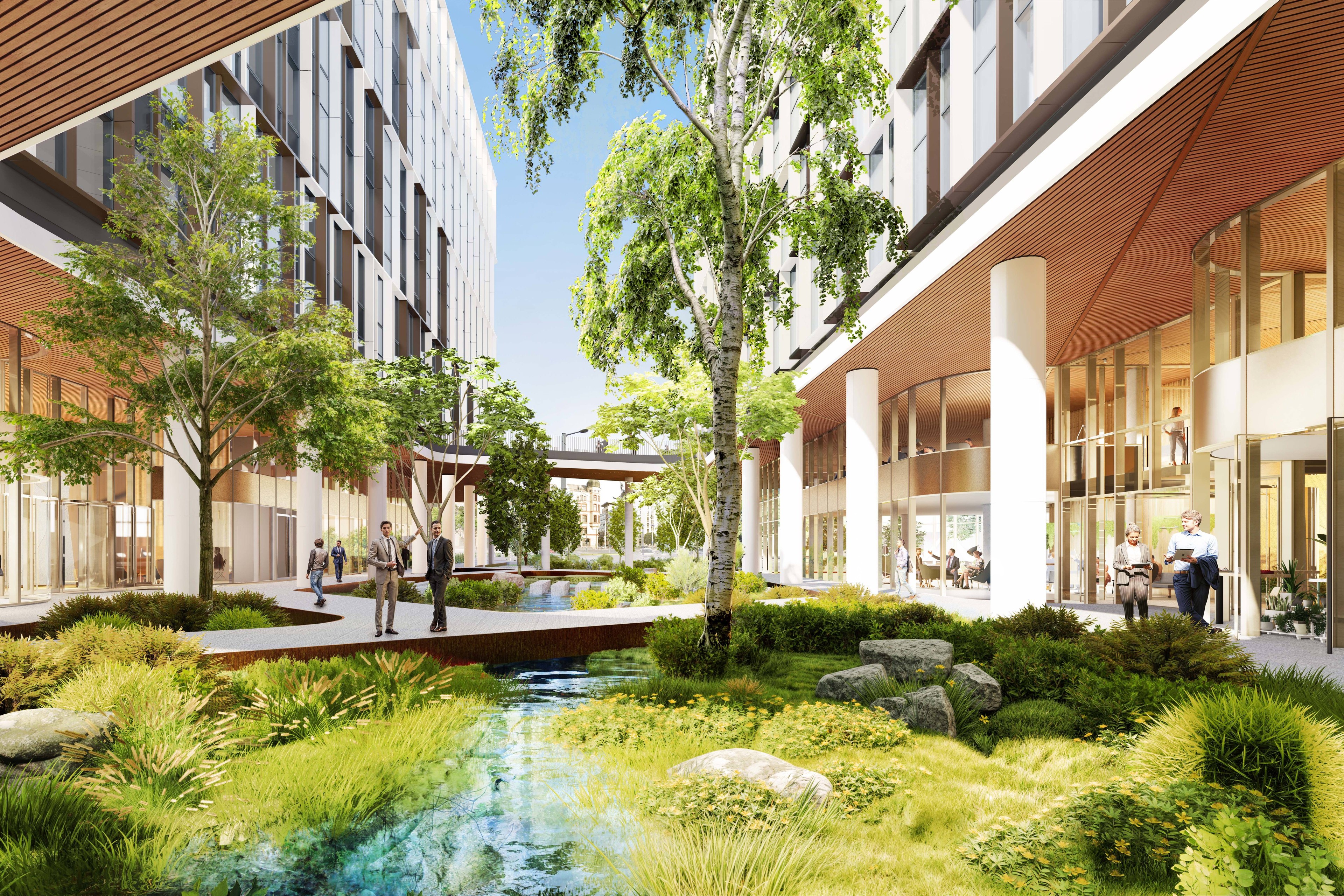
More than architecture. A way of thinking
At H2Offices, this mindset shaped every decision from the very beginning. Here, buildings are not placed on top of a site. They are carefully placed within a living system.
Landscape, water and architecture are designed together, shaping how spaces are used, how they feel and how they change over time.
Letting nature lead the way
The design process deliberately reversed the usual order. Instead of shaping landscape around fixed buildings, the site was first understood as a living system.
Water movement, sunlight, soil conditions and natural circulation patterns were mapped before architectural volumes were placed. Architecture was introduced only where
it could coexist with these systems, not disrupt them. This is why moving through H2Offices feels intuitive. Paths make sense. Open spaces feel intentional. Nothing feels like leftover space, because nature sets the rules from the start.
The why behind this approach is simple. When natural logic leads, people instinctively feel comfortable using the space.
Diversity as a foundation, not a detail
Placemaking across the site includes 183 types of plants. This diversity was chosen with intention.
Different species bring resilience, seasonal variation and ecological balance. Native and adapted plants were prioritized to reduce water demand, improve survival rates and support biodiversity.
The landscape was designed to mature over time, allowing the environment to deepen in character rather than peak at delivery.
This kind of richness cannot be improvised later. It comes from early commitment and long-term thinking.
Water that works and feels good
Water was treated as infrastructure and experience at the same time.
Ponds, rain gardens and wetlands collect, slow and filter rainwater naturally. These systems reduce pressure on technical infrastructure while shaping atmosphere.
Water reflects daylight, cools surrounding areas and adds gentle movement and sound that softens the environment.
By making water systems visible, environmental performance becomes something that can be seen and felt rather than hidden.
Arrival spaces designed to reset the pace
At H2Offices, lobbies are not designed as neutral boxes you pass through. They were designed as moments of transition.
The lobby of the first phase integrates 12 types of plants, carefully selected for indoor resilience, air quality benefits and visual calm.
Natural materials frame these spaces gently, allowing greenery to define the atmosphere without feeling ornamental.
The intention was continuity. Stepping inside should feel like entering the same landscape, just in a quieter, more focused form.
Letting light do what it does best
Natural light was treated as a shared resource rather than a competitive one.
Building orientation and spacing were carefully studied to avoid overshadowing. Vertical layering introduced green roofs, terraces and planted decks that distribute daylight across multiple levels.
Vegetation provides shading where needed, while water surfaces enhance brightness through reflection.
Comfort is achieved first through design, then supported by systems. This balance improves energy performance and creates spaces that feel stable and pleasant throughout the day.
Collaboration makes the difference
What made this approach possible was close, ongoing collaboration.
The developer, the architect, landscape designers and engineers worked as one team from the start. Decisions were tested both aesthetically and technically. Biophilic ambition was matched with practical solutions,
from structural systems that support mature trees to water strategies that perform reliably over time.
This collaborative process allowed ideas to evolve without losing coherence. Each discipline informed the other, ensuring that design intent survived construction and daily use.
Categories
Contact

András Ábrahám
Project Director